Source-first briefs on model releases, weights, licenses, runtimes, training infrastructure and ecosystem shifts — tied back to the evidence standards of the registry.
Up to 10 dailyPrimary sources first200–500 word briefsNo quality ranking
A public LoRA and merged checkpoint adapt a huge sparse model for software agents; publisher benchmarks suggest a narrow gain, not universal superiority.
Primary sourceContinuity Research / Migel Tissera — Tess-4.5-594B-A17B official model cardSource published November 2026 (exact day not stated)
Hugging Face expands native open-weight architecture support and introduces an ExportedModel interface for moving compatible checkpoints into supported inference runtimes.
Primary sourceHugging Face — Transformers v5.23.0 official releaseSource published 2026-11-13
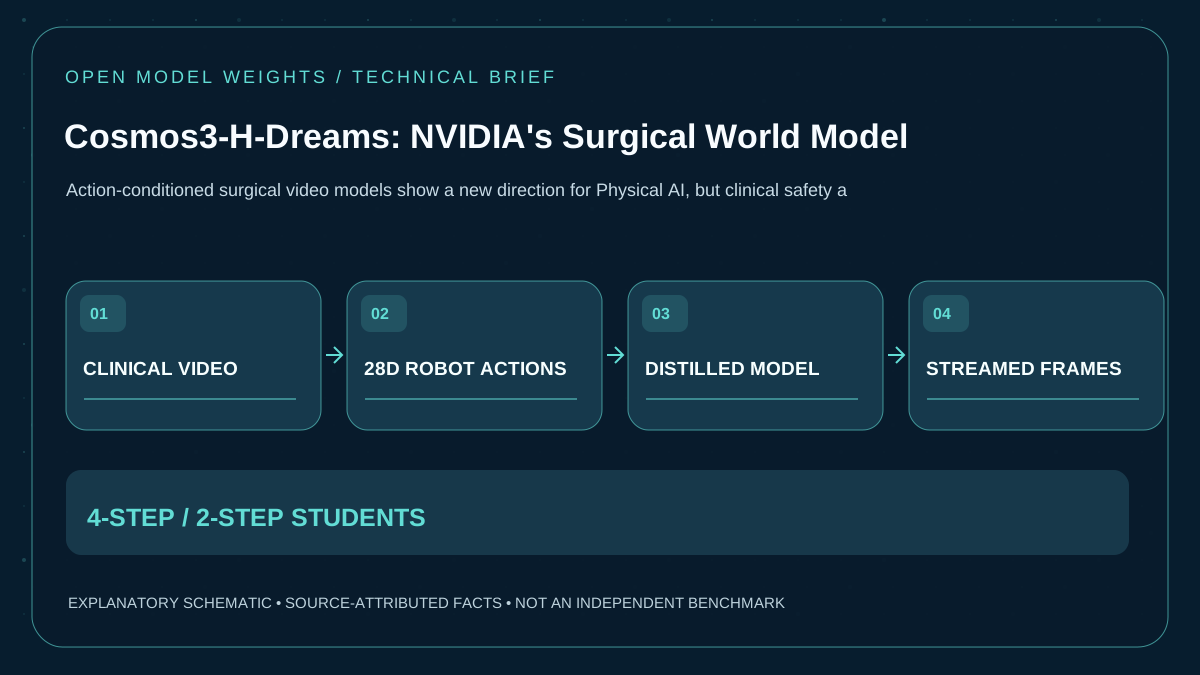
Cosmos3-Nano variants generate multi-view driving observations, simulator-conditioned video and robotic-action forecasts; licenses and physical fidelity still require scrutiny.
Primary sourceNVIDIA — Cosmos 3 interactive world simulation technical blogSource published 2026-11-05
A Qwen3.8-27B supervised fine-tune exposes how post-training changes political response framing, but the reported improvements depend on the authors' own rubric and judge.
Primary sourceNous Research — Arete-27B official technical reportSource published 2026-11-06
Baseten releases a Rust/CUDA serving engine for DeepSeek-V4.1-Flash. Its Blackwell throughput is vendor-reported, and Elastic License 2.0 restricts managed hosting.
Primary sourceBaseten Labs — DeepSeek Ultrafast official repository and READMESource published 2026-11-13
Updated quantized weight files target better local model accuracy at similar sizes; Unsloth's 5–10% comparison remains a publisher-reported benchmark claim.
Primary sourceUnsloth — Qwen3.8-27B Dynamic v3.1 announcement on Hugging FaceSource published 2026-11-13
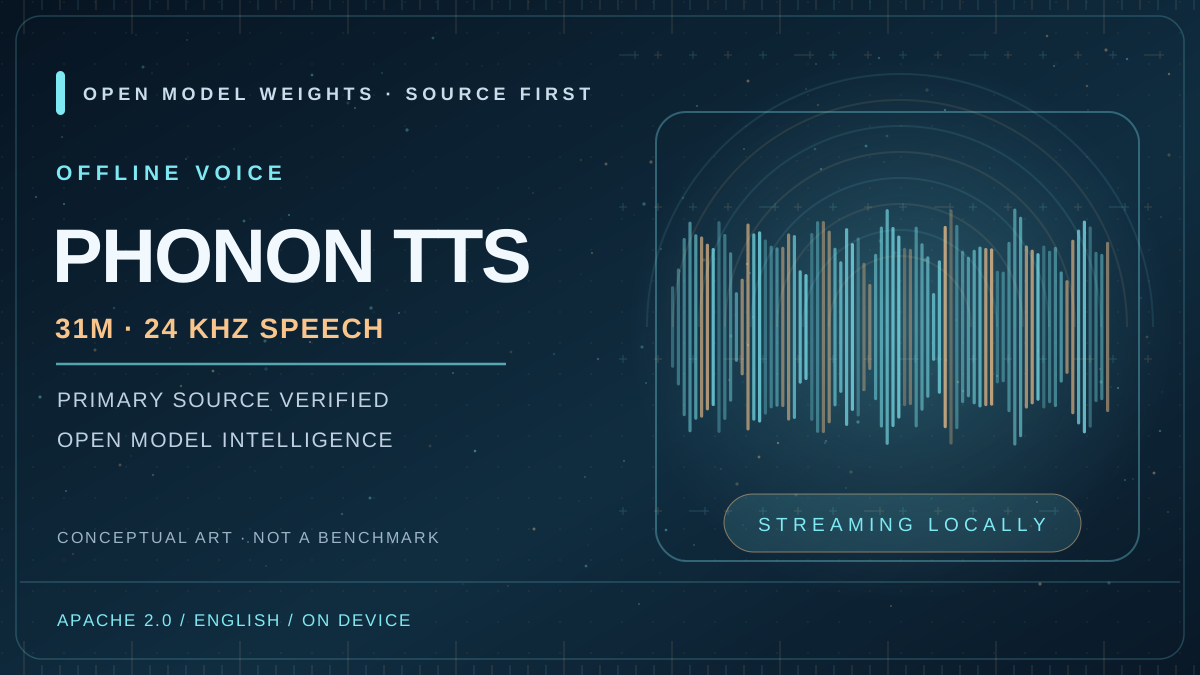
Google outlines local ASR and TTS stacks around Parakeet, PocketTTS, Phonon and Kokoro, with separate Android-system and cross-platform model paths.
Primary sourceGoogle AI Edge Team / Hugging Face — On-Device Speech Recognition and Text-to-Speech in Google AI Edge GallerySource published 2026-11-12
The local-inference stack gives downstream C/C++ integrations an explicit major, minor and patch compatibility policy; it is not a new model checkpoint.
Primary sourceggml-org — llama.cpp v1.0.0: A stronger foundation for the local AI ecosystemSource published 2026-11-13
The openly documented 8,115-question benchmark tests whether AI helpers recognize a mistaken proposed solution and redirect toward the user's actual goal.
Primary sourceAllen Institute for AI — XYBench: Helping with the problem behind the questionSource published 2026-11-13
Researchers add independently trained experts to a frozen Qwen3.5 MoE and combine the skills in one checkpoint, avoiding a standard adapter-merging bottleneck.
Primary sourceTNG Technology Consulting — Bring Your Own Expert! Extending MoE Models with New Domain ExpertiseSource published 2026-11-10
Four public GGUF/NVFP4 repositories target NVIDIA GPUs, but host-memory offload and custom model licenses make the practical deployment story more nuanced.
Primary sourceEdge0 — official Edge0-145B Q3_K model card, weights and licenseSource published 2026-11-13
A new public benchmark evaluates 21 decision and reasoning systems across 11 domains and separately tests option-order stability and missing-answer recognition.
Primary sourceLi et al. — SO-Arena: Benchmarking the Capability Spectrum and Reliability of System One Models, arXivSource published 2026-11-11
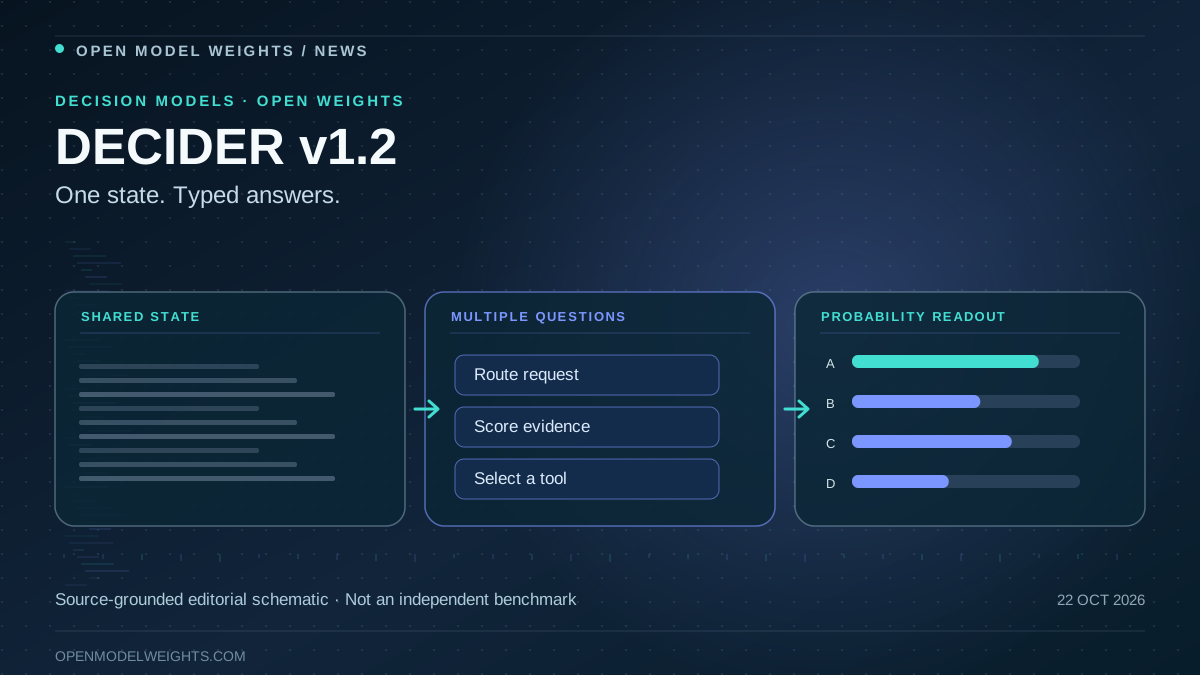
Perplexity describes two Apache-licensed decision checkpoints for classification and routing, but the advertised Hugging Face weight access needs a separate check.
Primary sourcePerplexity — official Decider v1.3 release and model cardSource published 2026-11-12
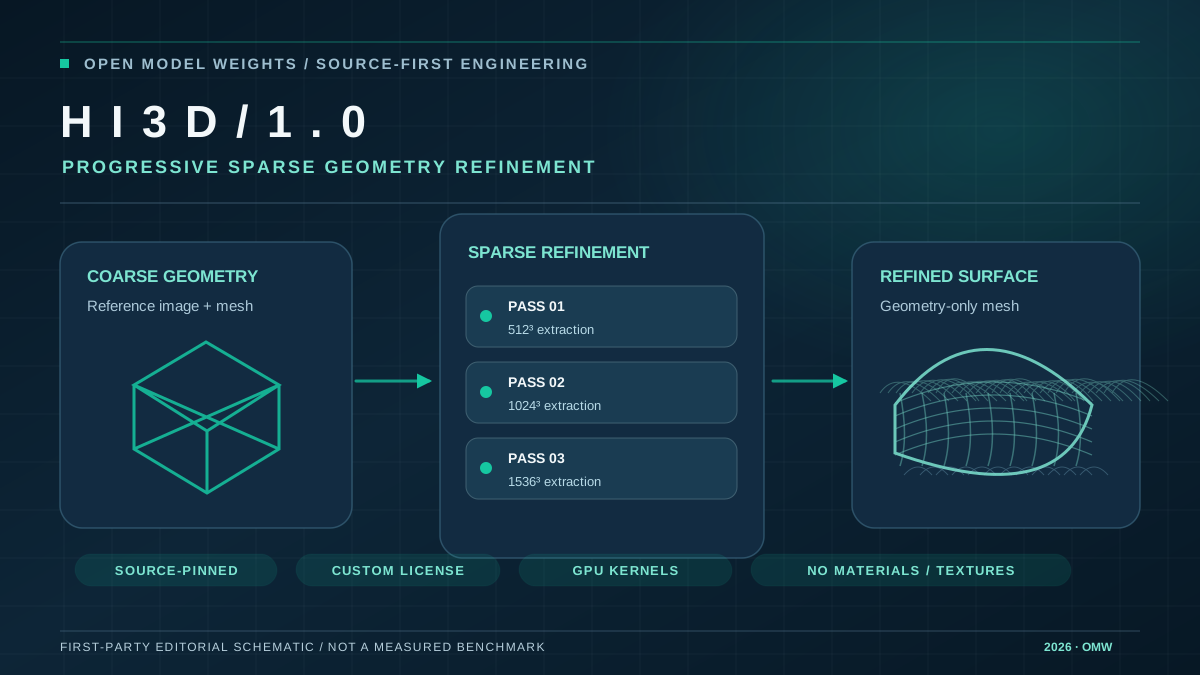
An open training recipe adds local and hosted fine-tuning paths for TRELLIS.2 geometry, while gated DINOv3 access and substantial GPU needs still matter.
Primary sourceHugging Face — The Definitive Fine-Tuning Guide for 3D Generation ModelsSource published 2026-11-12
A newly merged fix restricts server-side request paths involving the browser CORS proxy and remote media, highlighting security considerations in local inference.
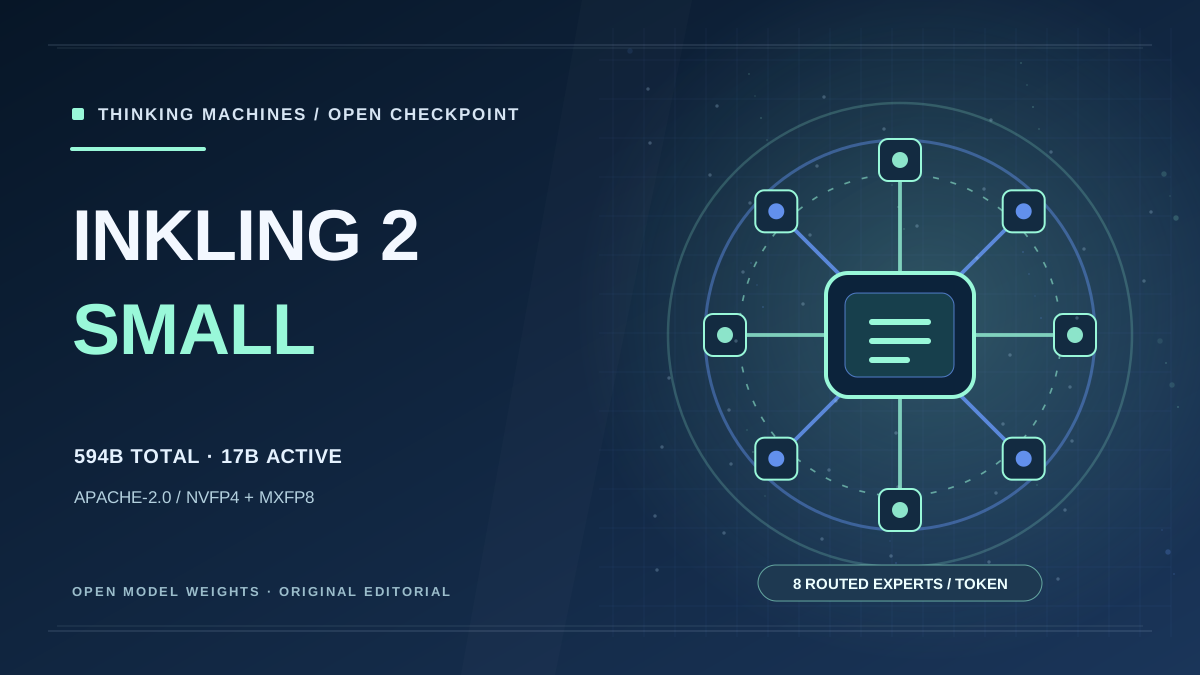
The November 12 checkpoint release turns a hosted-only multimodal agent model into downloadable Apache-2.0 weights, but local operation still requires a GPU cluster.
Primary sourceThinking Machines Lab — Inkling 2 Small official model card and weight-release updateSource published 2026-11-12
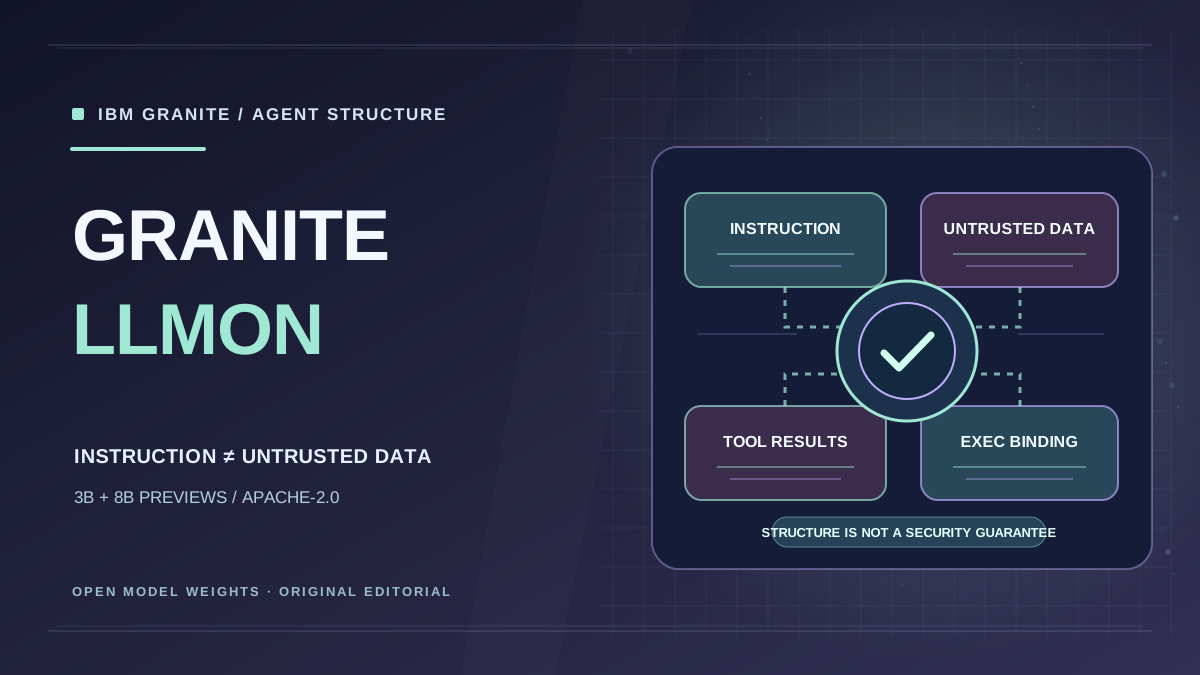
Two Apache-2.0 experimental checkpoints encode instruction-to-data bindings inside the chat template, offering a testable alternative to plain-text tool context.
Primary sourceIBM Granite team — official LLMON release and model cardsSource published 2026-11-12
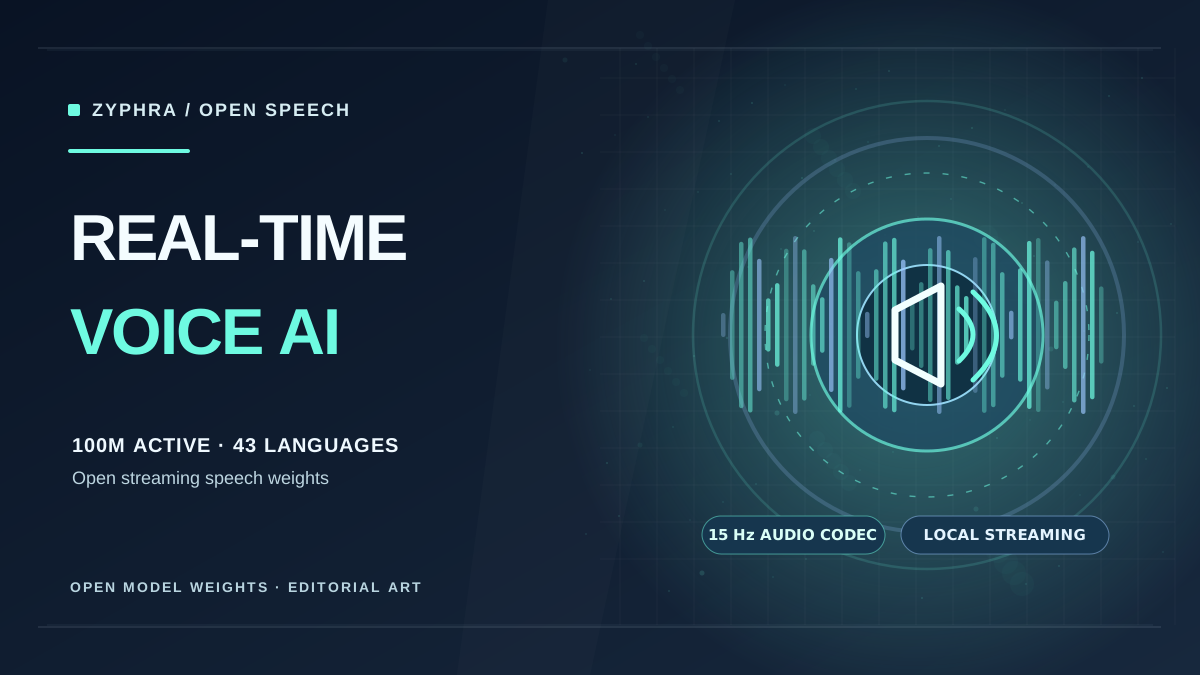
The compact sparse speech model ships with Apache-2.0 weights, multiple local runtimes and a new evaluation suite; latency and quality rankings are Zyphra's own measurements.
Primary sourceZyphra research team — official ZONOS3-Mini releaseSource published 2026-11-12
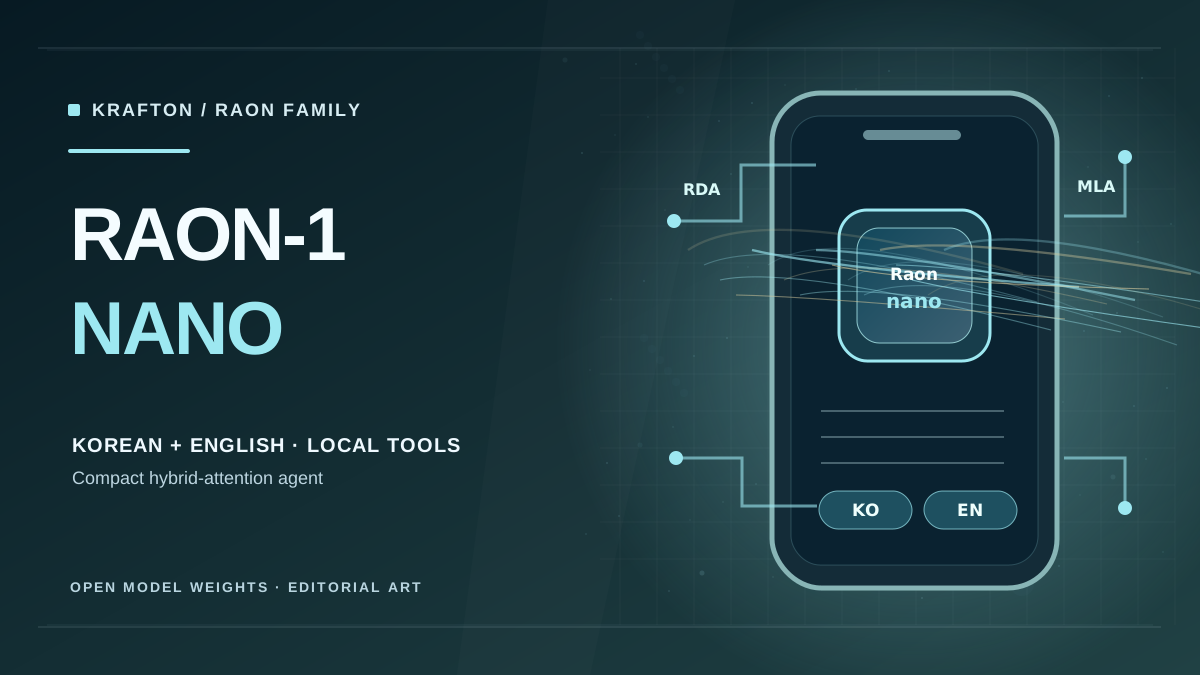
The dense model pairs 18 recurrent-attention layers with six full-attention layers; its 1.5B effective-parameter description is not its total checkpoint size.
Primary sourceKRAFTON AI — official Raon-1 nano model cardSource published 2026-11-11
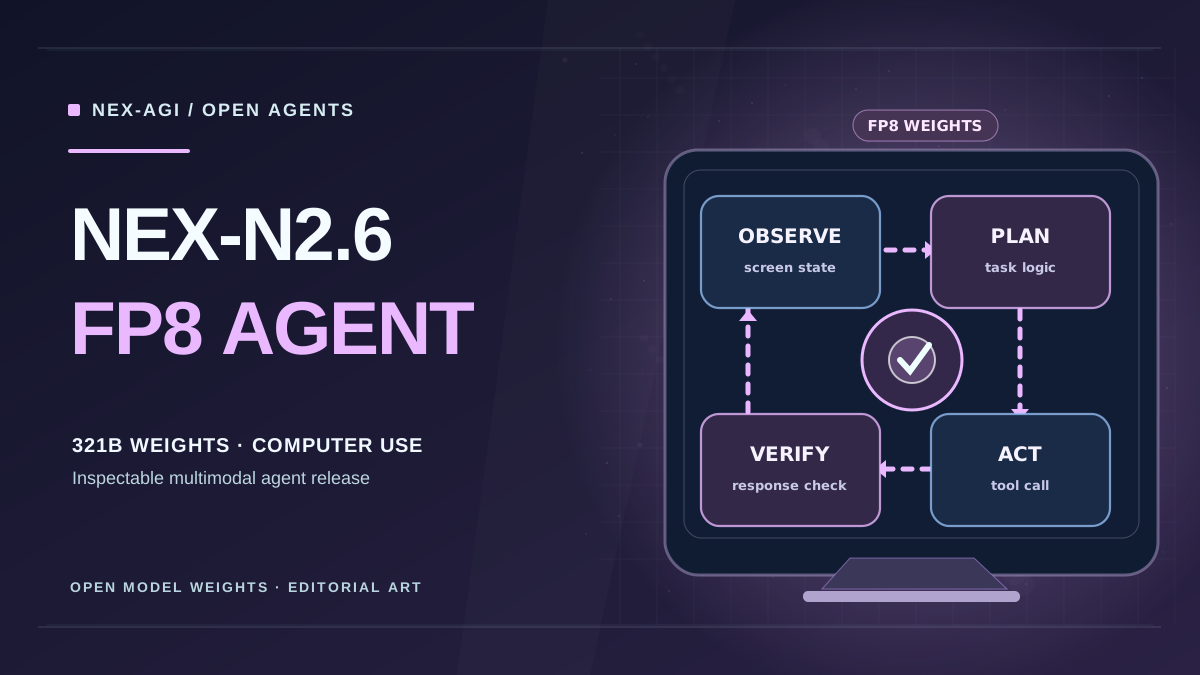
The GLM-derived model targets longer tool-driven workflows; first-party benchmark scores are model-level claims, not independent tests of the published FP8 export.
Primary sourceNex-AGI — official Nex-N2.6 checkpoint and model cardSource published 2026-11-10
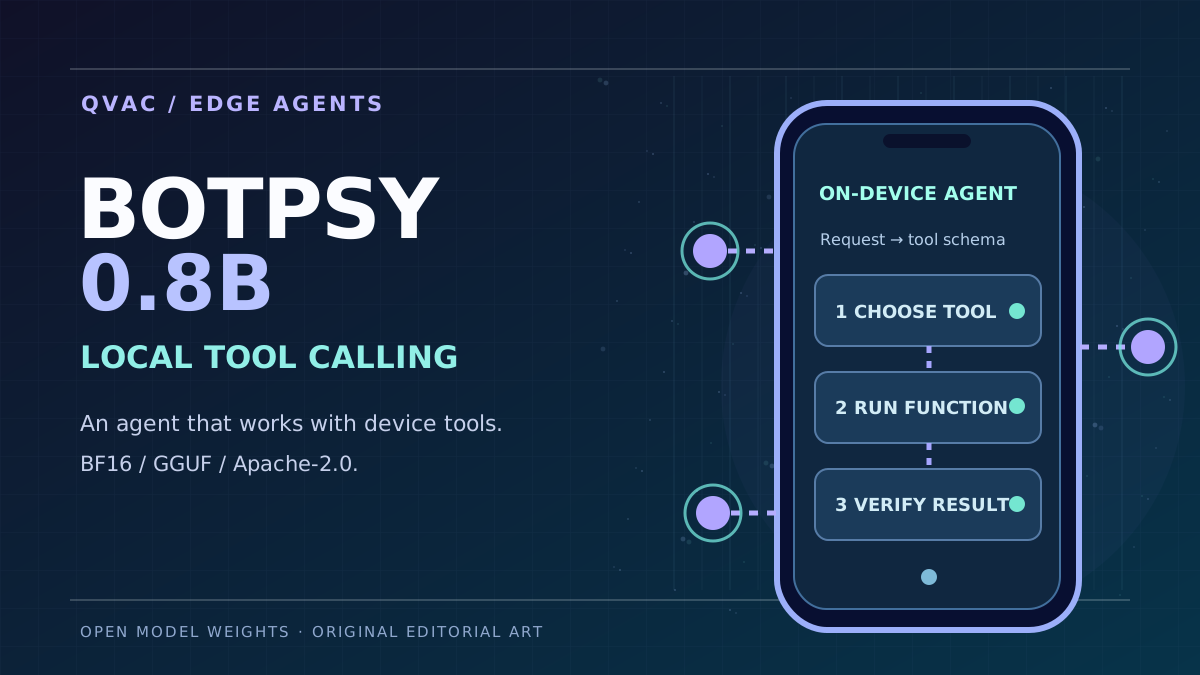
QVAC's Qwen-derived model prioritizes on-device tool execution, but its benchmark comparisons and prompt-injection safety figures have not been independently reproduced.
Primary sourceQVAC / Tether AI Research — official BotPsy launchSource published 2026-11-11
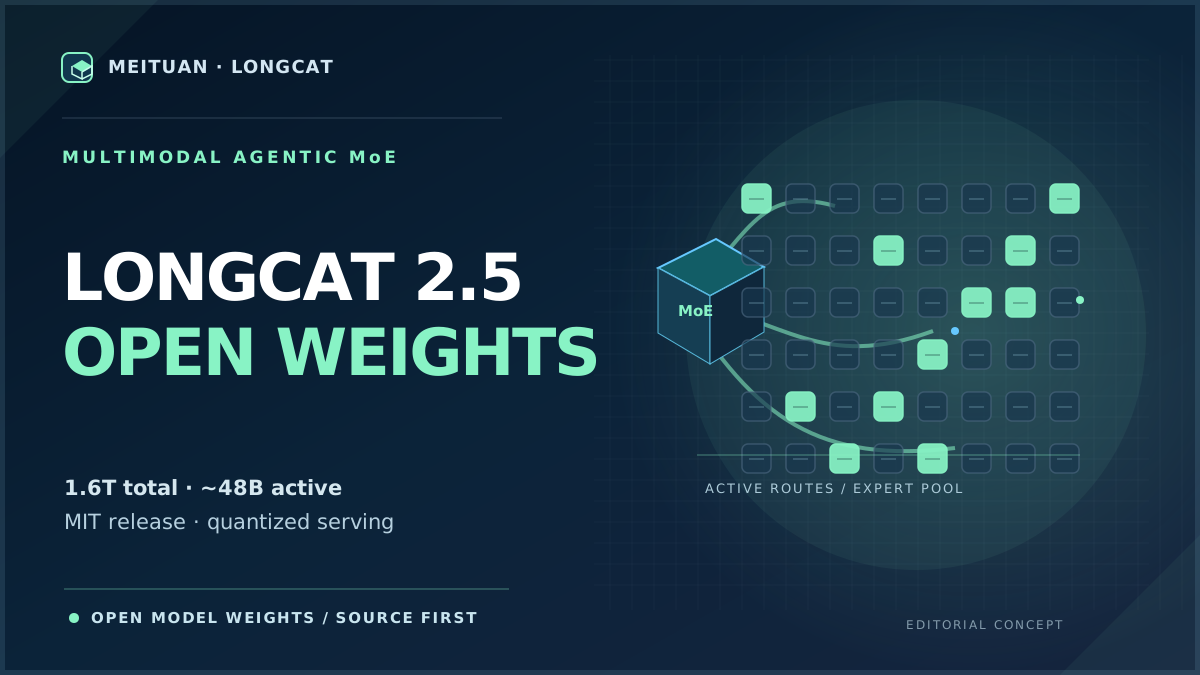
Public MIT-licensed artifacts bring Meituan's enormous vision-and-code mixture of experts into the open, but reproducible deployment and evaluation remain substantial hurdles.
Primary sourceMeituan LongCat — official LongCat-2.5 model card and licenseSource published 2026-11-09
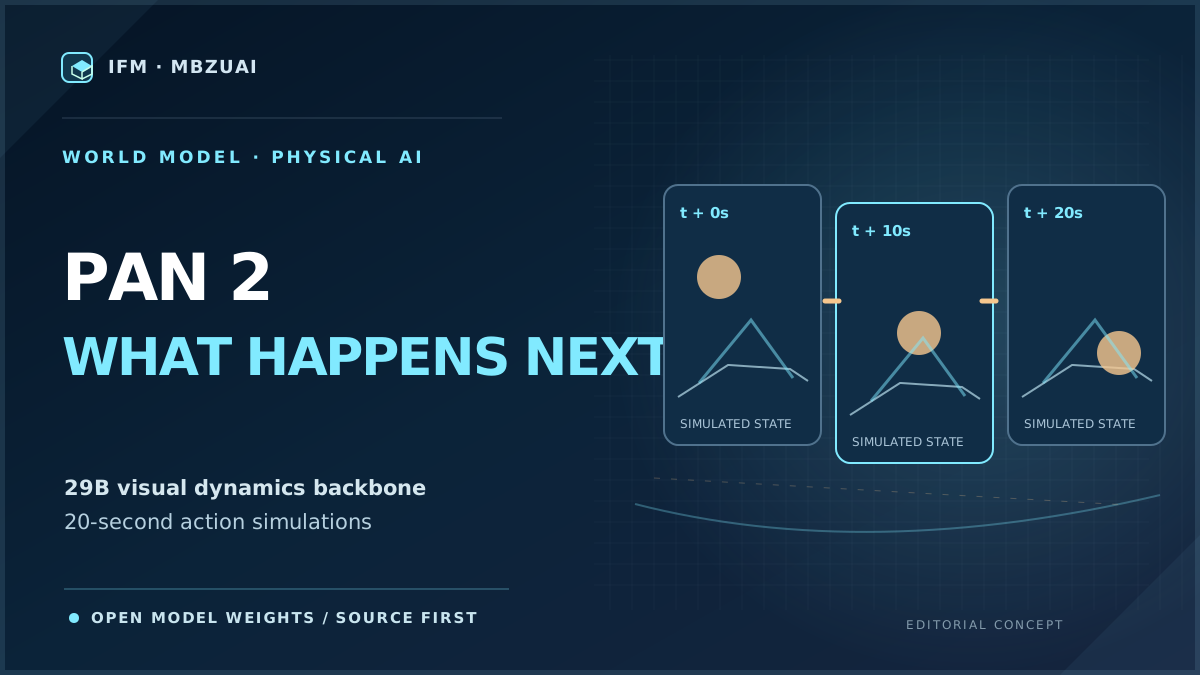
PAN 2 combines a language-based event planner with a 29B video diffusion backbone to explore possible action outcomes, while physical fidelity still needs controlled tests.
Primary sourceInstitute of Foundation Models — official PAN 2 launchSource published 2026-11-10
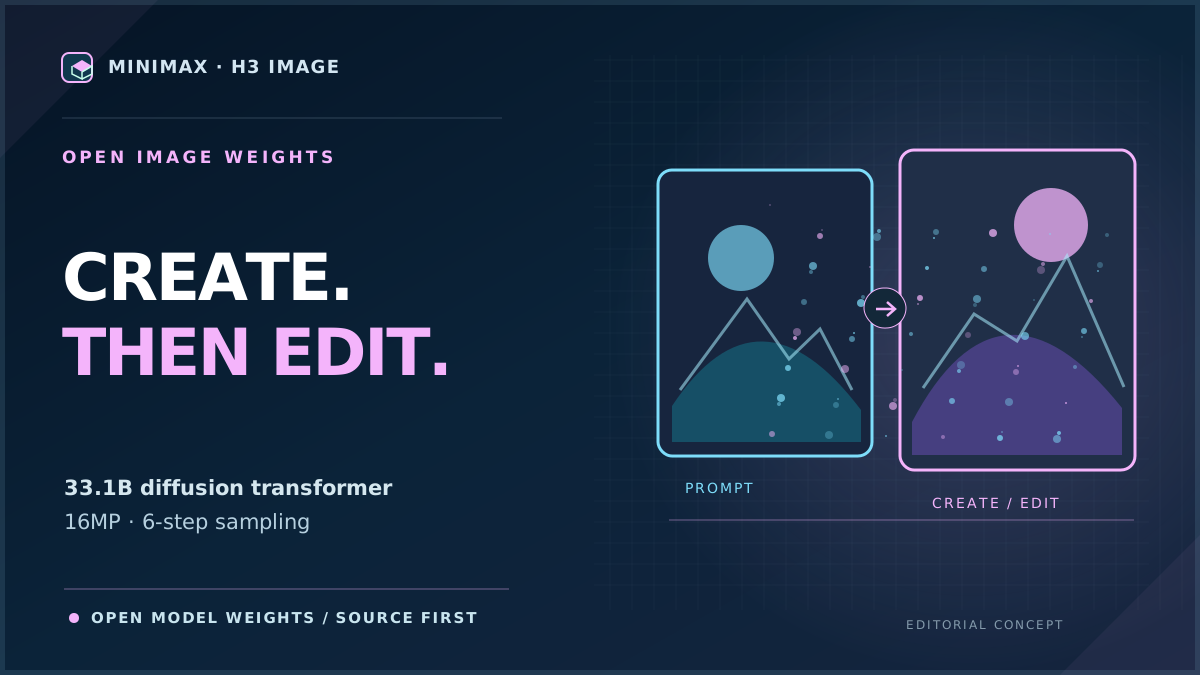
The new image checkpoint unifies creation and multi-image editing at high resolution, but the accompanying text encoder, hardware footprint and custom license are decisive.
Primary sourceMiniMax — November 11 official H3-Image launchSource published 2026-11-11
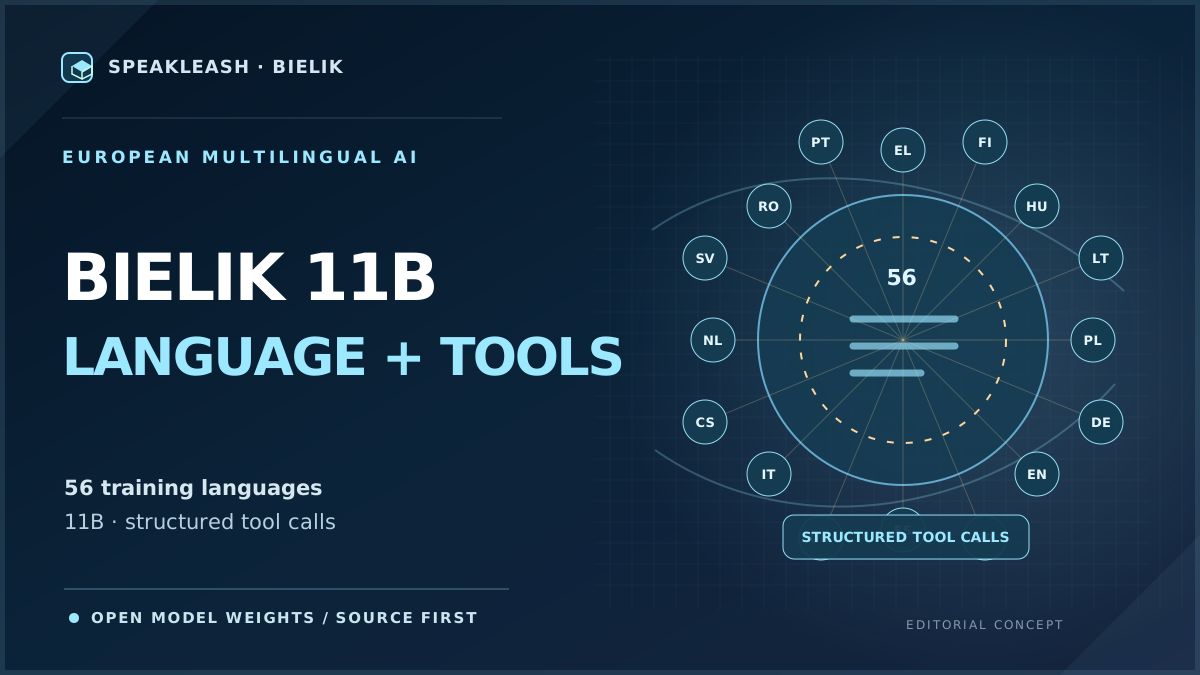
The Polish-centered open-weight model combines European multilingual coverage with instruction, reasoning and structured tool-call support, but file gating and real-language testing matter.
Primary sourceSpeakLeash / Bielik — official November 10 launchSource published 2026-11-10
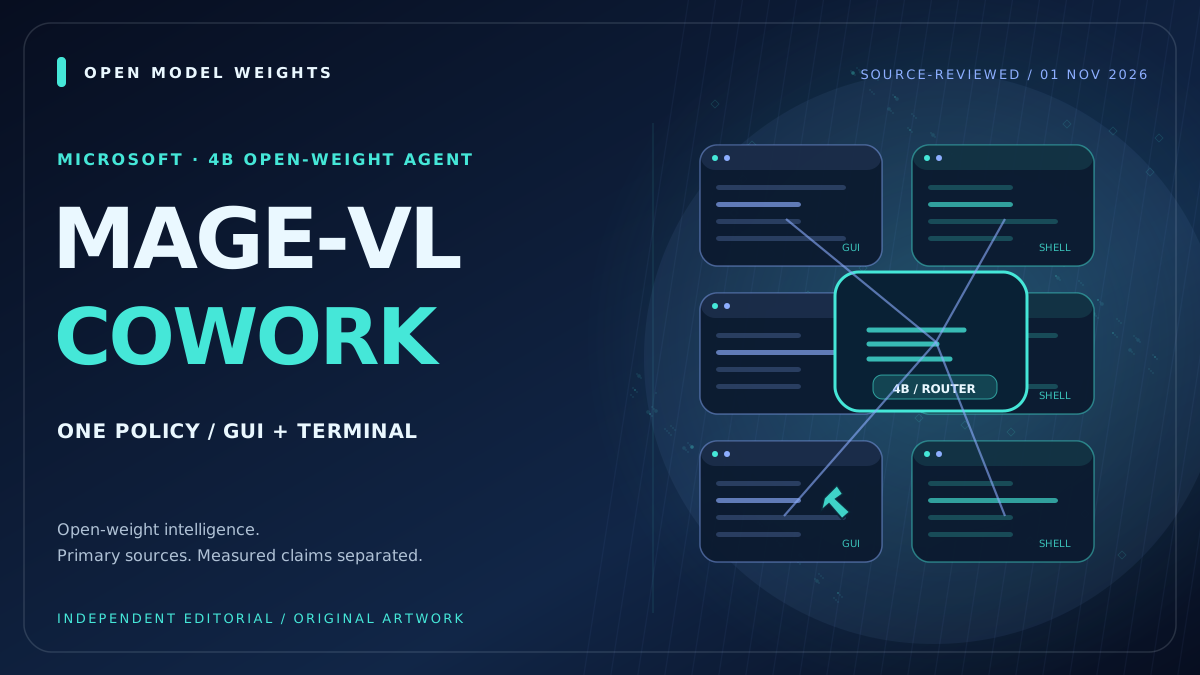
A downloadable four-billion-parameter vision-language policy combines screenshot-grounded clicks with persistent terminal operations instead of routing through separate agents.
Primary sourceMicrosoft Mage Team — official Mage-VL-Cowork model cardSource published 2026-10-30
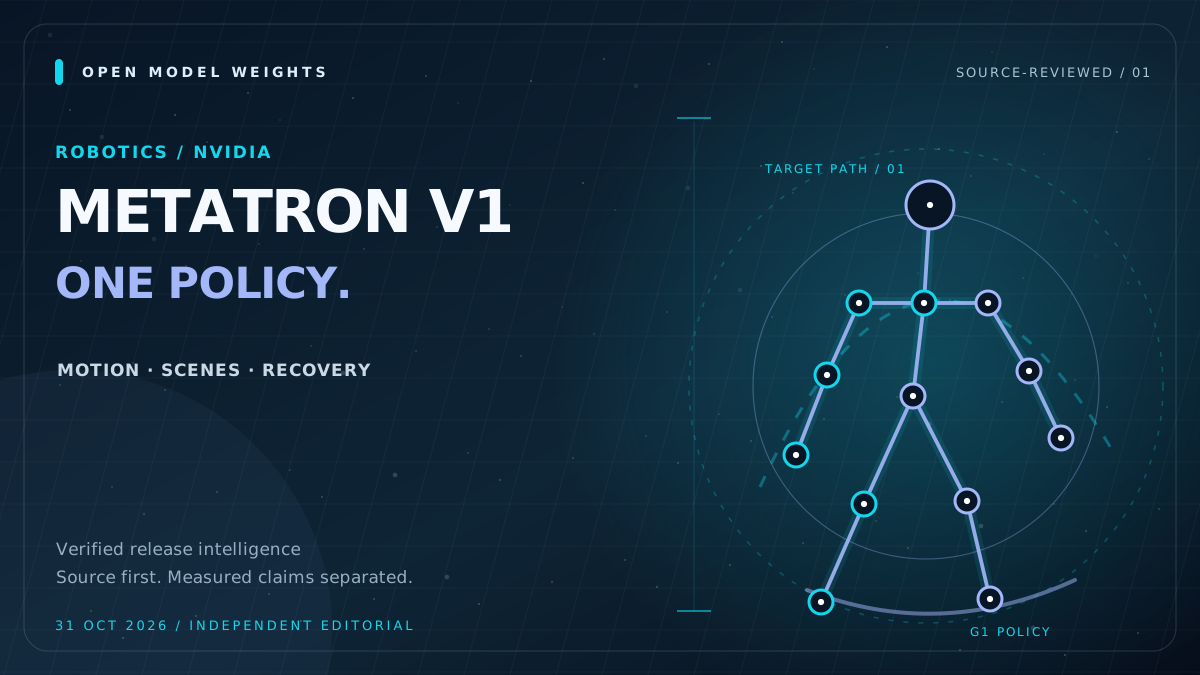
A downloadable Unitree G1 policy turns changing motion goals into whole-body actions, with distinct native and browser artifacts and clear deployment limits.
Primary sourceNVIDIA Research and NVlabs ProtoMotions — Metatron releaseSource published 2026-10-28
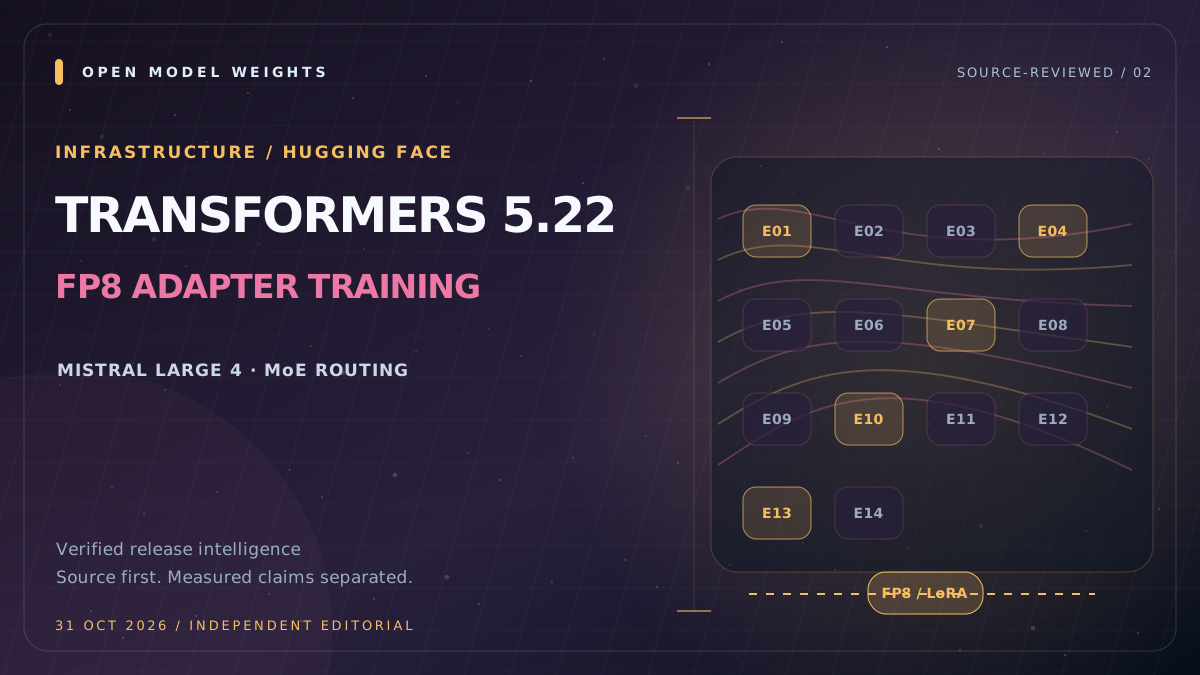
The new framework release adds native pathways for two newly published models while introducing FP8 backpropagation and a more economical MoE adapter-training path.
Primary sourceHugging Face Transformers official v5.22.0 release notesSource published 2026-10-29
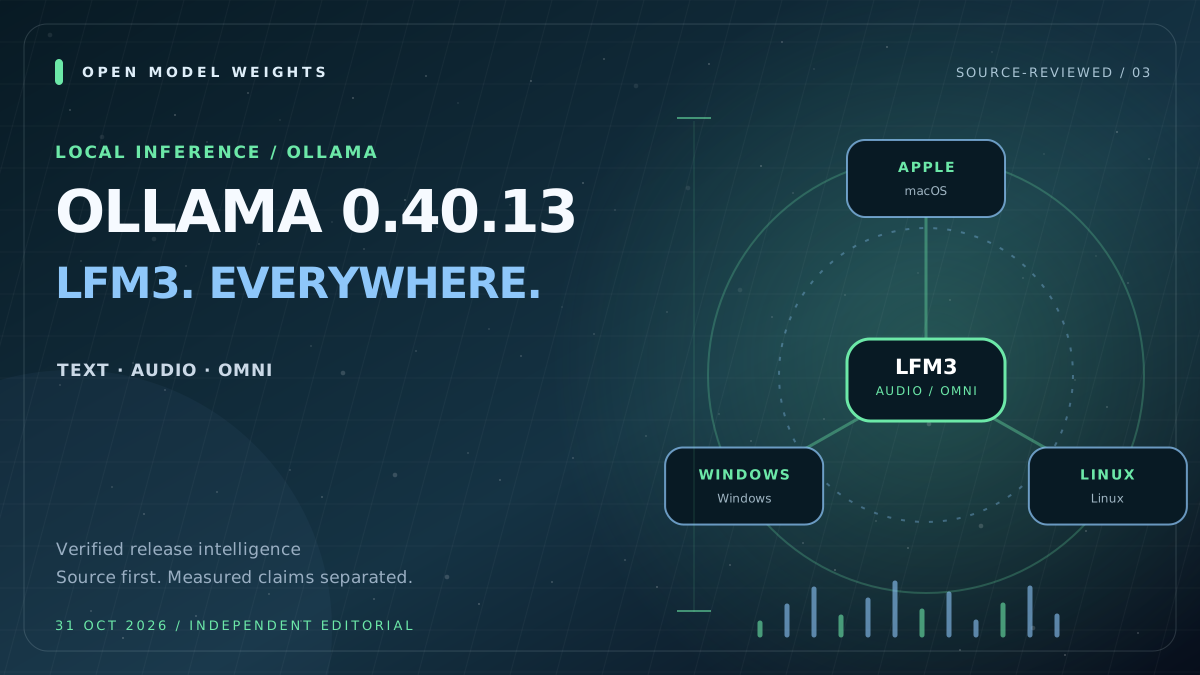
Liquid AI's local model family reaches Linux and Windows in Ollama, including speech-focused and multimodal variants previously introduced on Apple hardware.
Primary sourceOllama official v0.40.13 release notesSource published 2026-10-28
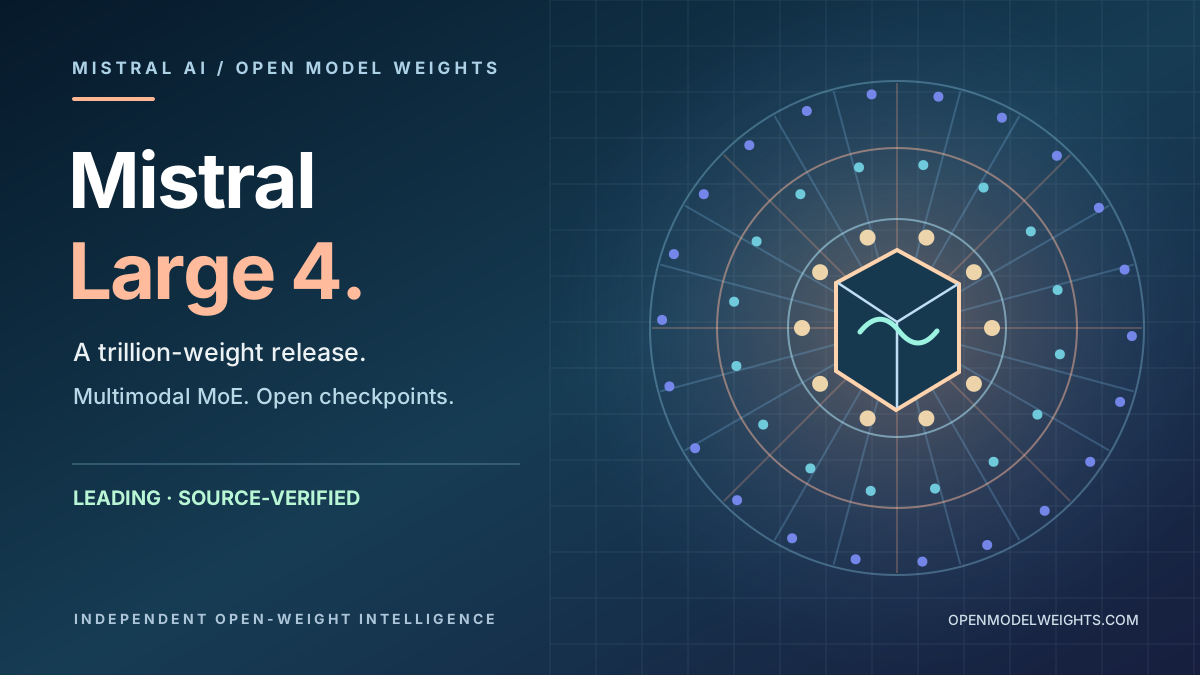
A newly downloadable trillion-parameter multimodal checkpoint earns a Leading listing, with its source revision, server-scale demands and license conditions clearly separated.
Primary sourceHugging Face — Welcome Le Chonk: Mistral Large 4Source published 2026-10-29
A new technical report separates streaming transcription, speaker-labelled text and audio understanding into distinct Qwen-Audio 3.1 deployment profiles.
Primary sourceQwen-Audio-3.1-ASR official research technical reportSource published 2026-10-20
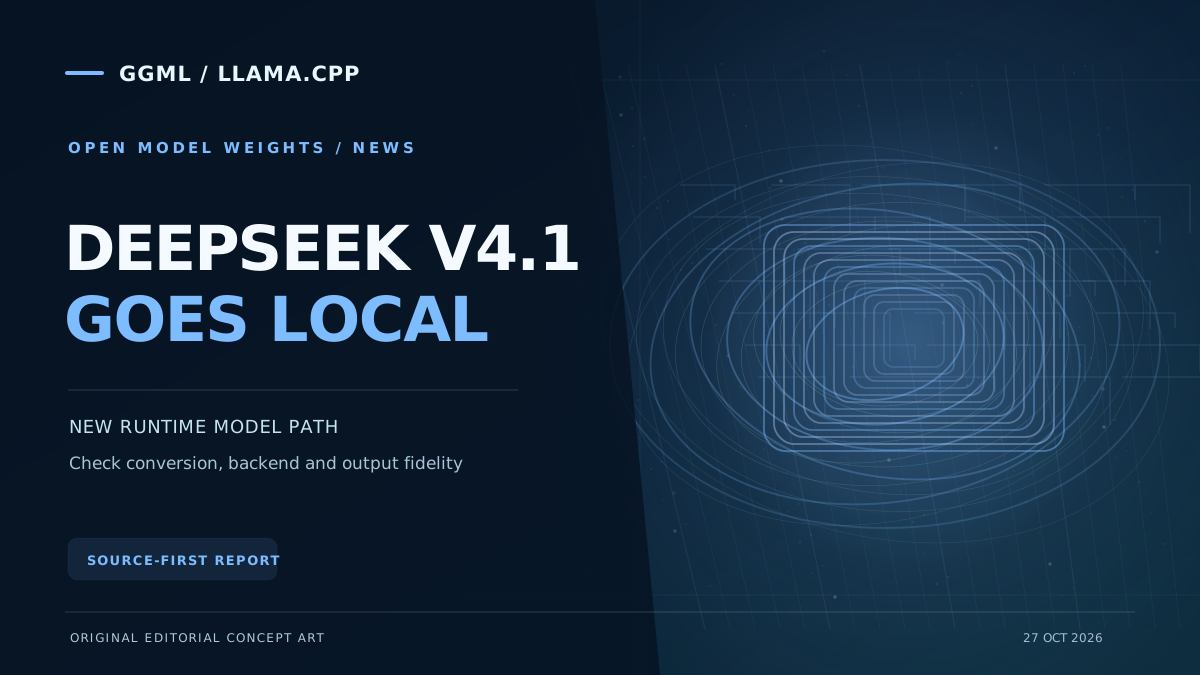
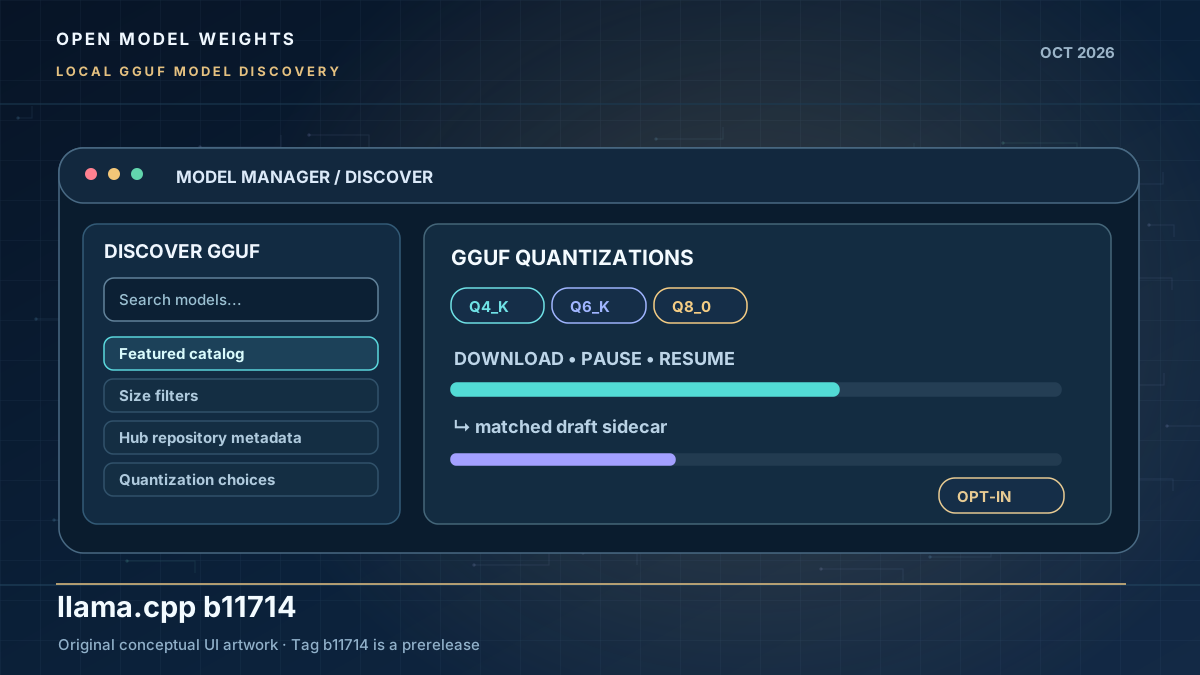
The ggml project merged a DeepSeek V4.1 Flash model-support change, extending local-inference code while leaving hardware and quality validation to users.
Primary sourceggml-org/llama.cpp official merged DeepSeek V4.1 Flash commitSource published 2026-10-25
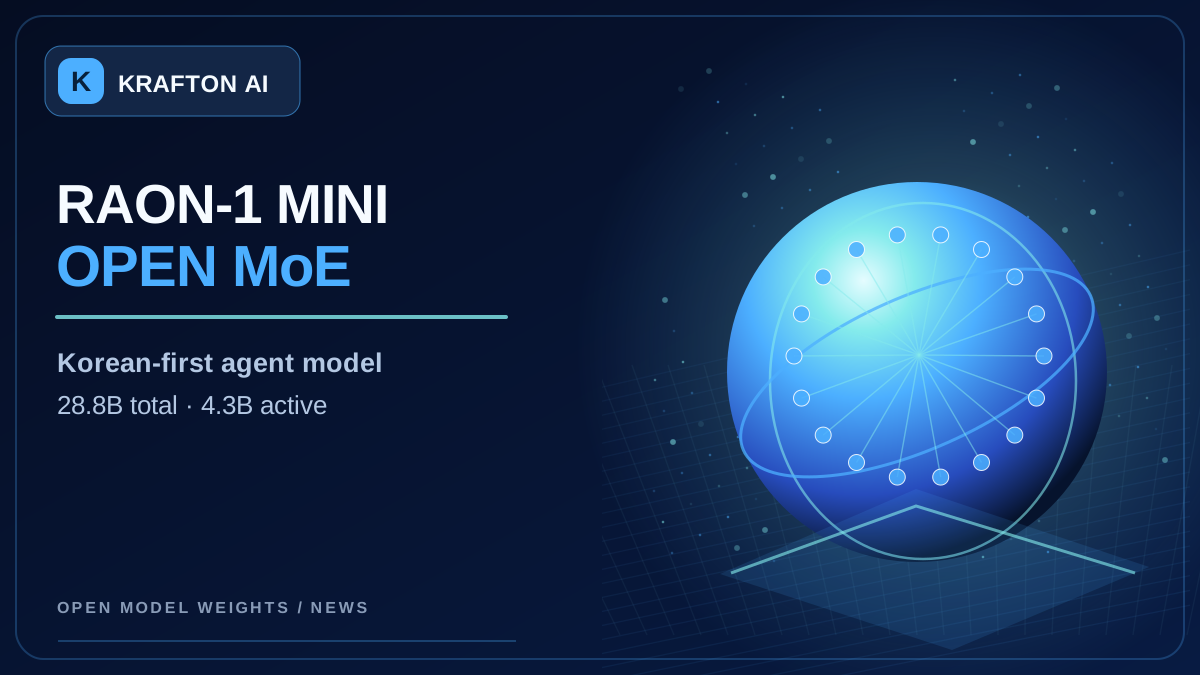
A Korean gaming company publishes a hybrid-attention sparse model with public preview weights, long context and separately documented inference variants.
Primary sourceKRAFTON AI official Raon-1 mini preview model cardSource published 2026-10-21
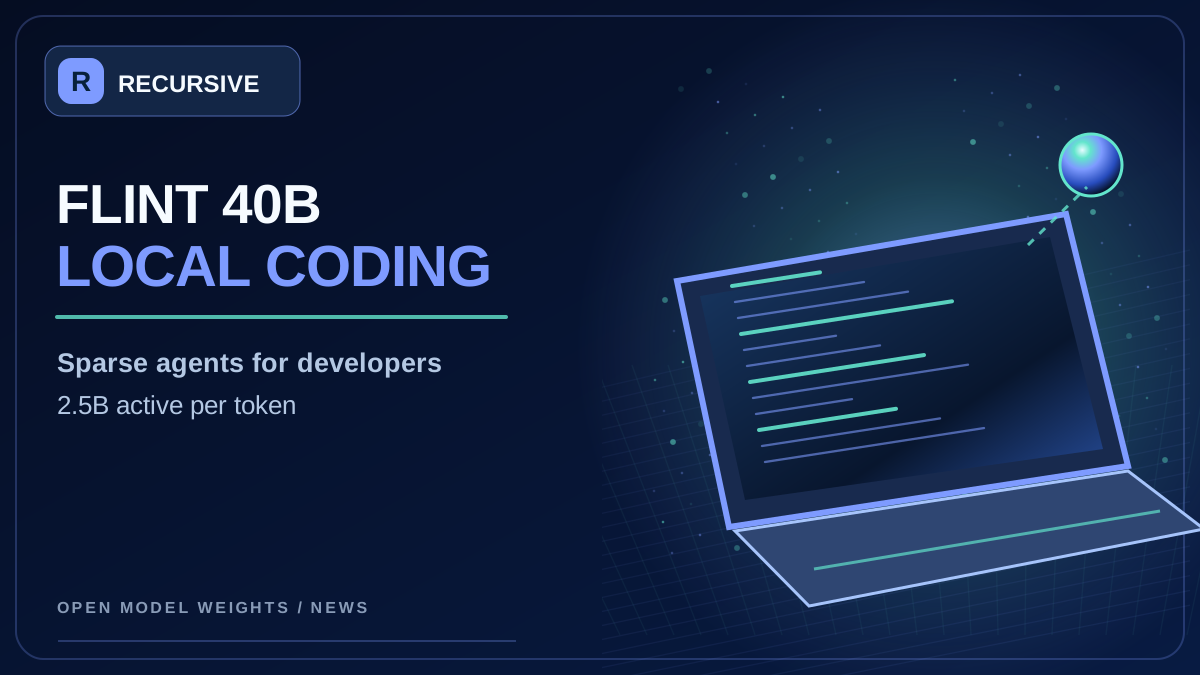
A new 40B-class sparse model pairs downloadable Apache-2.0 weights with a dedicated agentic-coding and inference story; speed comparisons remain vendor claims.
Primary sourceRecursive official Introducing Flint announcementSource published 2026-10-21
A Python client release improves data-pipeline freshness and job visibility, while preserving a clear boundary between Bucket updates and model-repository revisions.
Primary sourceHugging Face official huggingface_hub v2.3.0 release notesSource published 2026-10-22
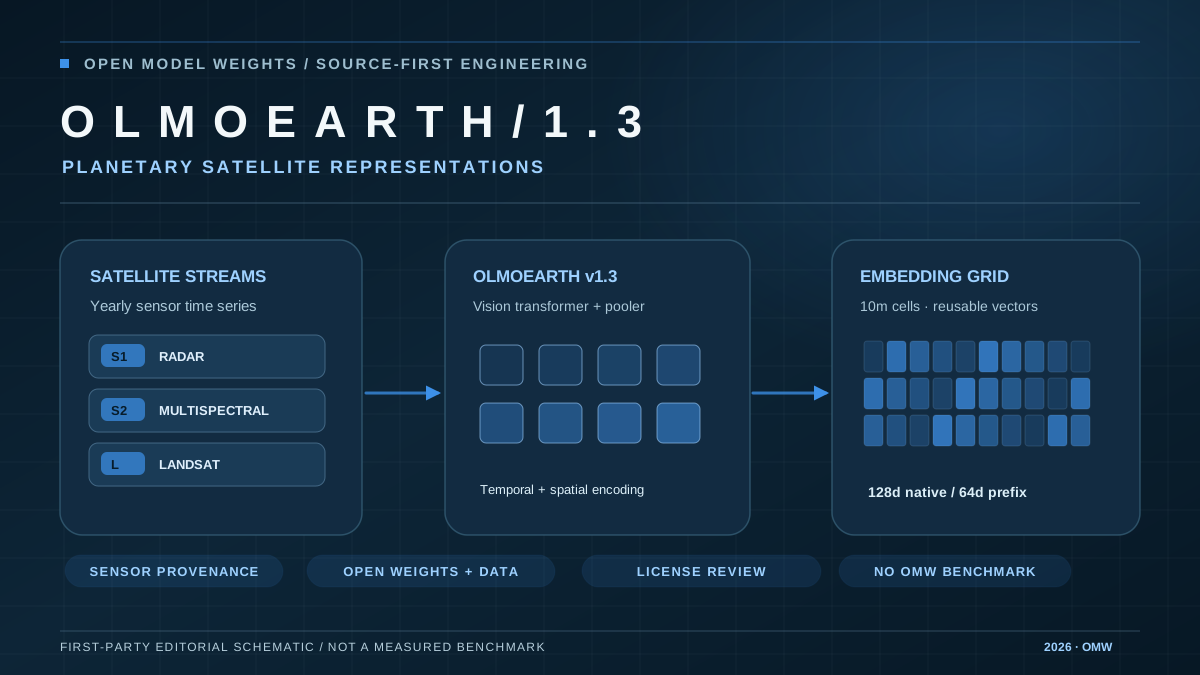
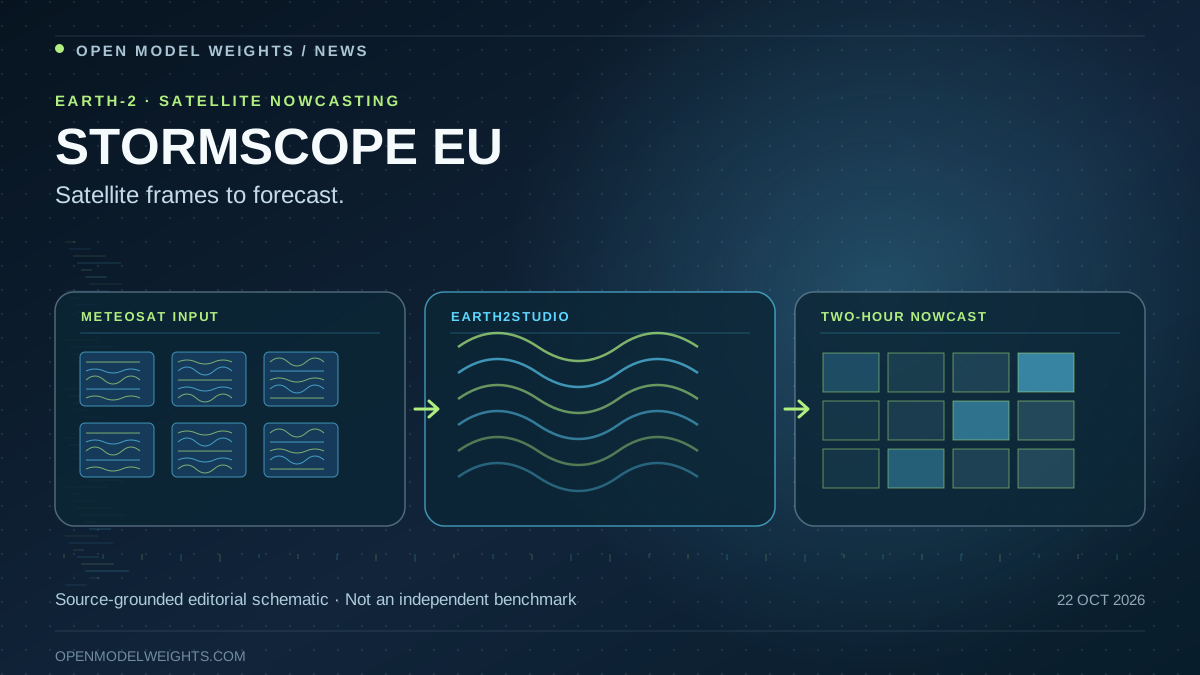
A Europe-specific Earth-2 nowcasting workflow uses Meteosat observations to predict cloud evolution, while satellite licensing and forecast skill need scrutiny.
Primary sourceNVIDIA official Earth-2 Europe weather-model announcementSource published 2026-10-21
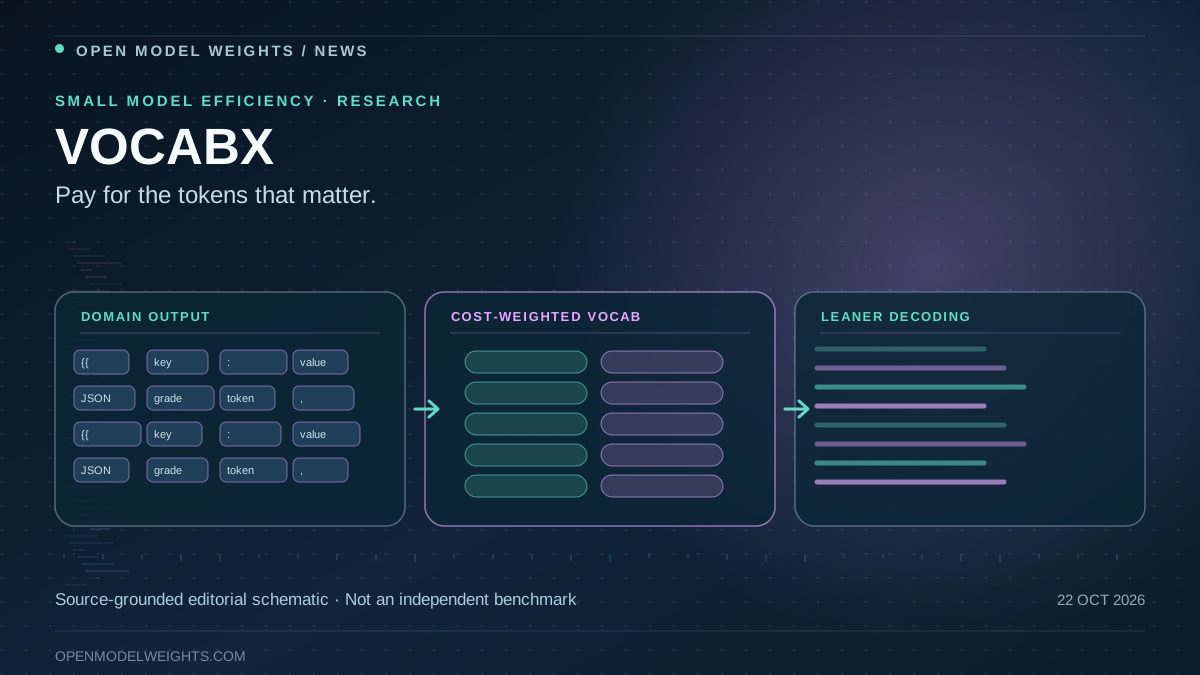
A domain-specific tokenizer can matter as much as model size for repeated structured outputs, but the reported saving is one team's preliminary case study.
Primary sourceDharma-AI first-party VocabX vocabulary-specialization research previewSource published 2026-10-21
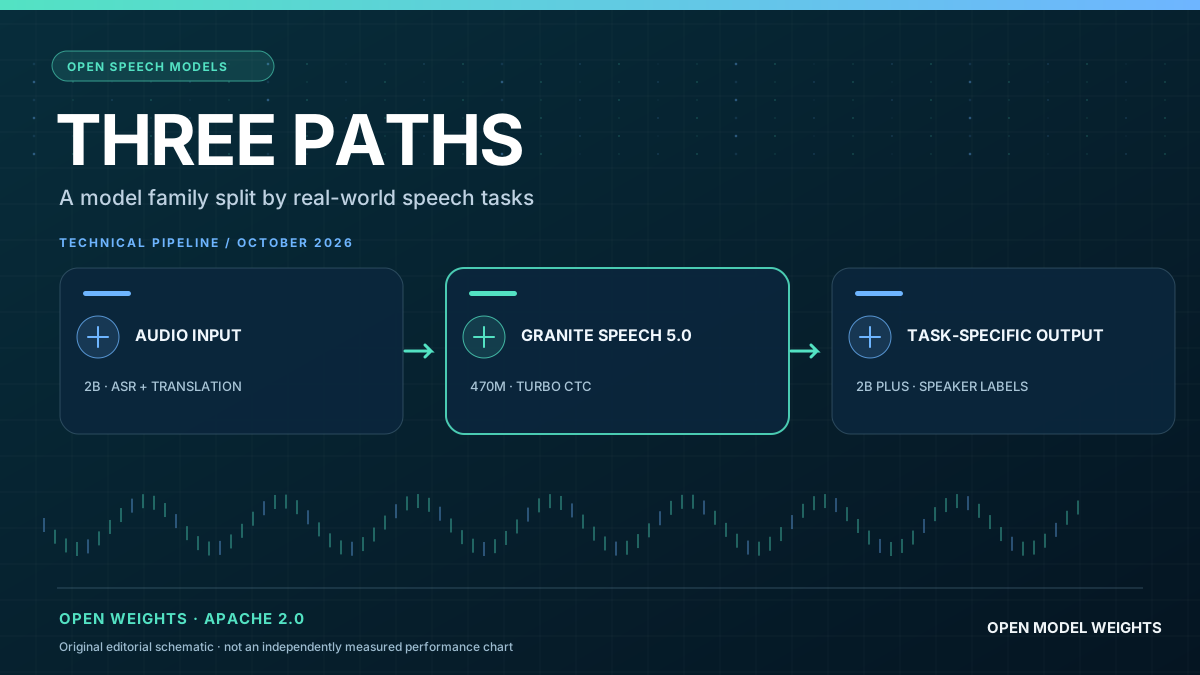
IBM's Apache-licensed speech release offers three routes for transcription, translation and speaker-labelled audio, with distinct deployment trade-offs.
Primary sourceIBM Granite official Granite Speech 5.0 technical releaseSource published 2026-10-21
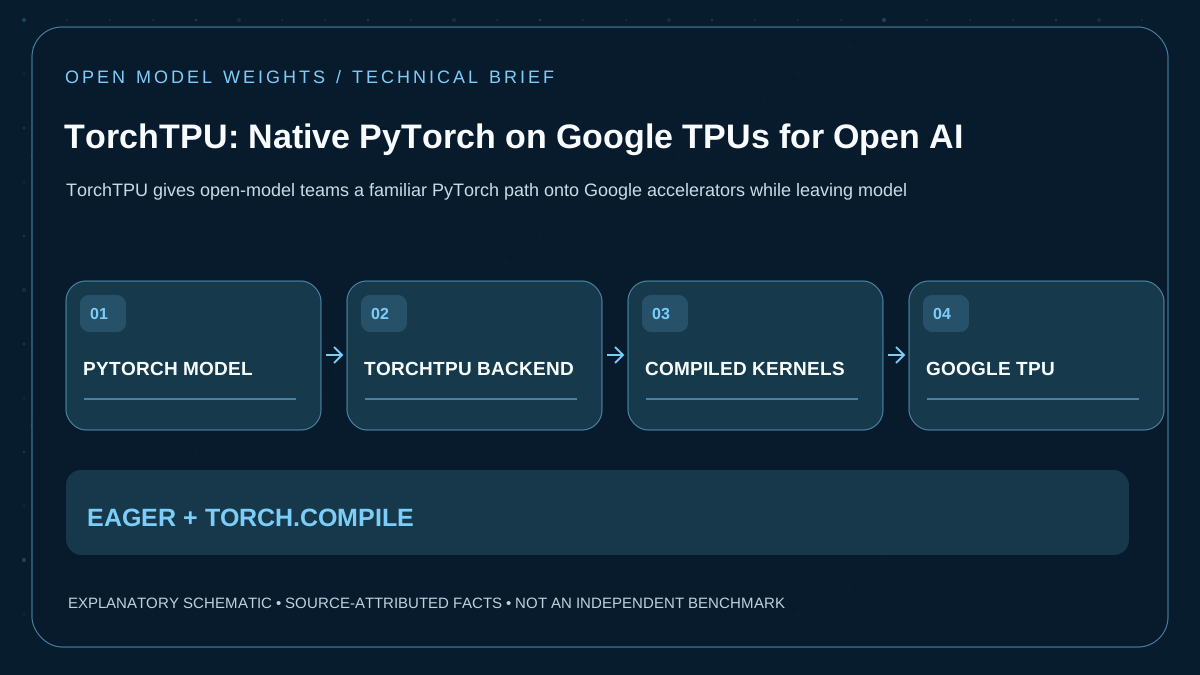
TorchTPU gives open-model teams a familiar PyTorch path onto Google accelerators while leaving model-specific compatibility and actual cost to be tested.
Primary sourceGoogle Cloud official TorchTPU announcementSource published 2026-10-20
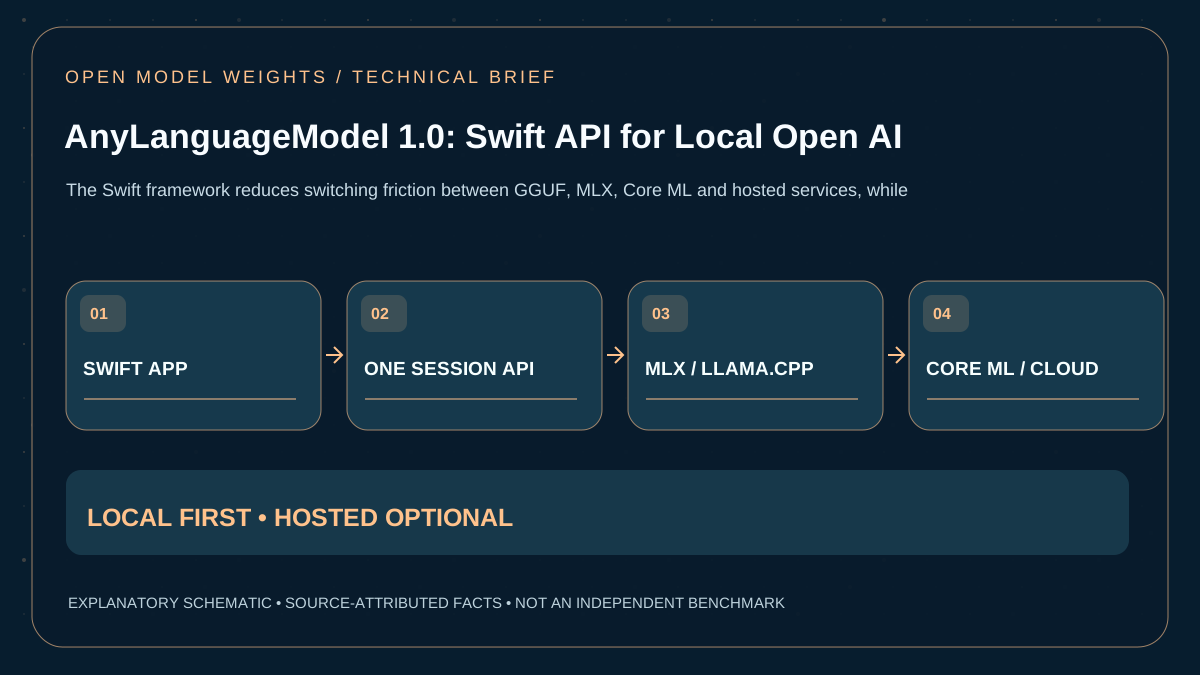
The Swift framework reduces switching friction between GGUF, MLX, Core ML and hosted services, while individual model capabilities and licensing still differ.
Primary sourceHugging Face official AnyLanguageModel 1.0 announcementSource published 2026-10-20
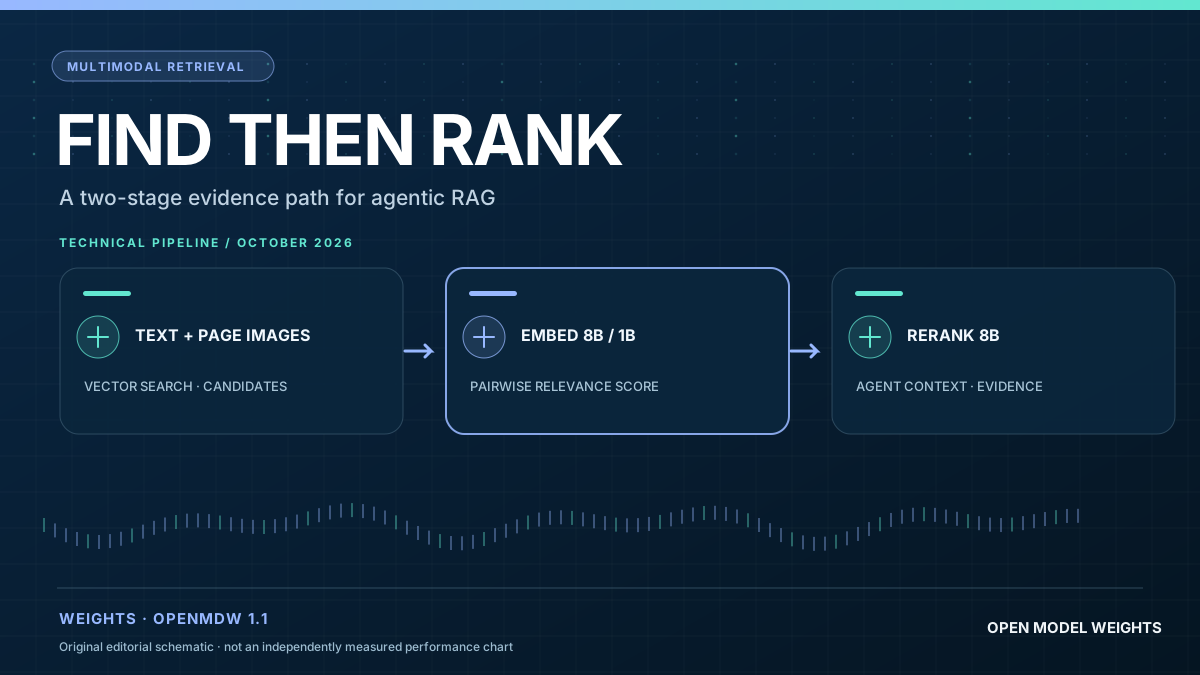
A 631M-parameter document parser extracts layout, text and bounding boxes from page images, with producer-reported quality tests and OpenMDW license terms.
Primary sourceNVIDIA official Nemotron 3.5 Parse model cardSource published 2026-10-17
The TorchNeuron public beta promises less specialized code for training open weights on AWS Trainium, but dynamic-shape and runtime limits still matter.
Primary sourceHugging Face official TorchNeuron announcementSource published 2026-10-19
New sparse embeddings offer English and multilingual semantic matching without requiring all the token-level index storage of late-interaction retrieval.
Primary sourceLightOn AI official SlideOn and mSlideOn model checkpointsSource published 2026-10-19
A small open speech recognizer targets transcription without uploading audio, with different laptop and phone language coverage and device-specific tradeoffs.
Primary sourceQVAC / Tether AI Research official TranscribePsy announcementSource published 2026-10-13
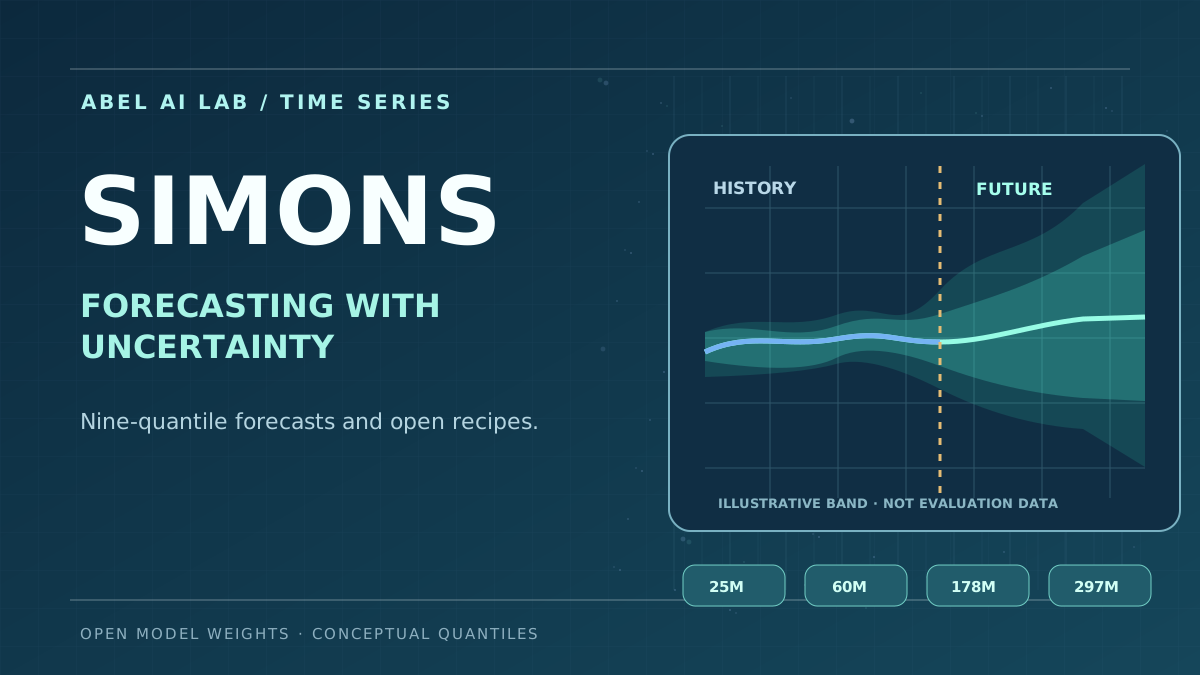
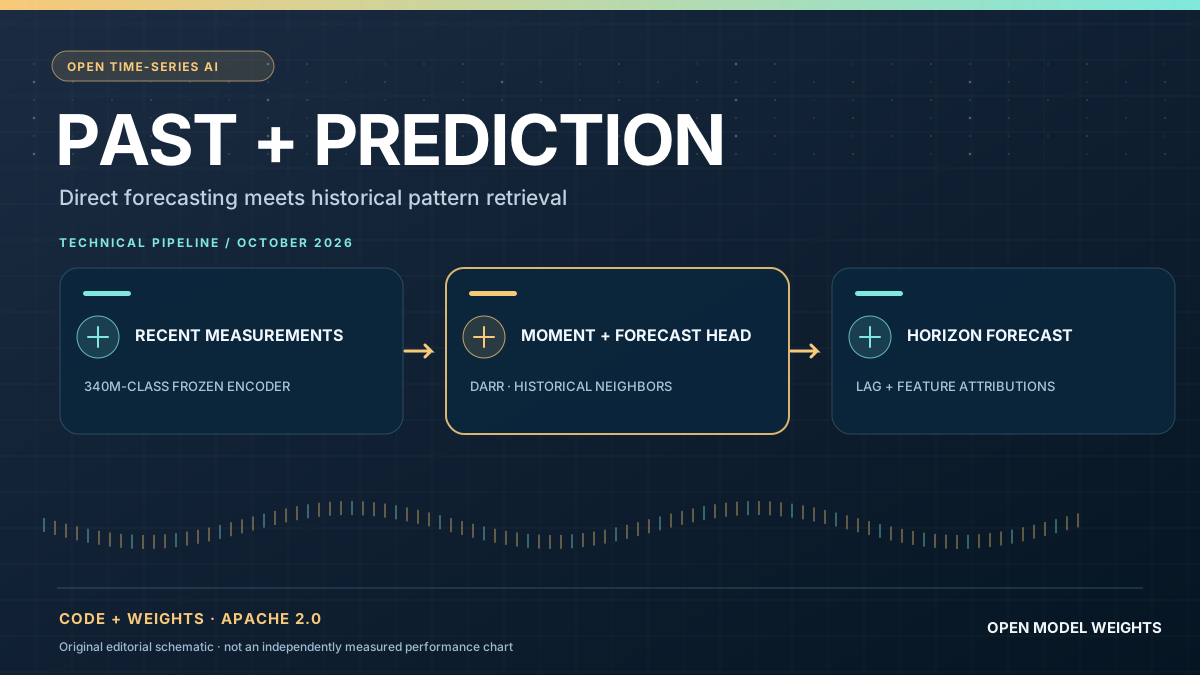
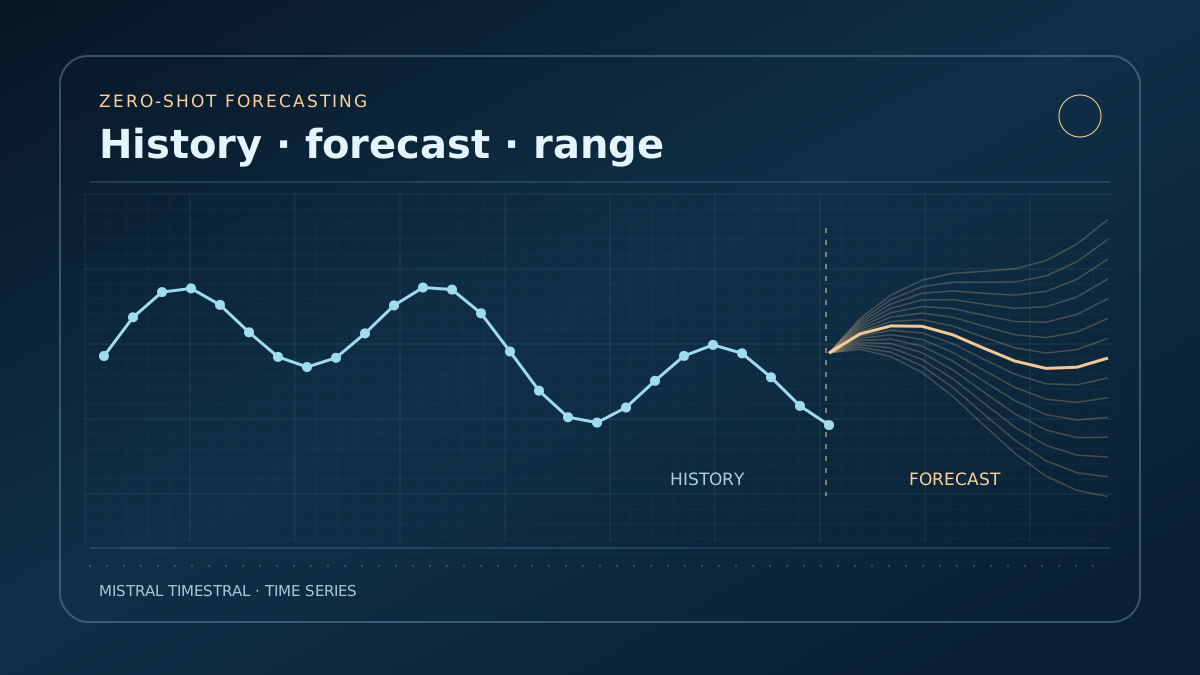
Four small forecasting checkpoints extend the open-weight ecosystem beyond chat models, with benchmark scores and license terms requiring qualification.
Primary sourceMistral AI official Timestral-209M model cardSource published 2026-10-15
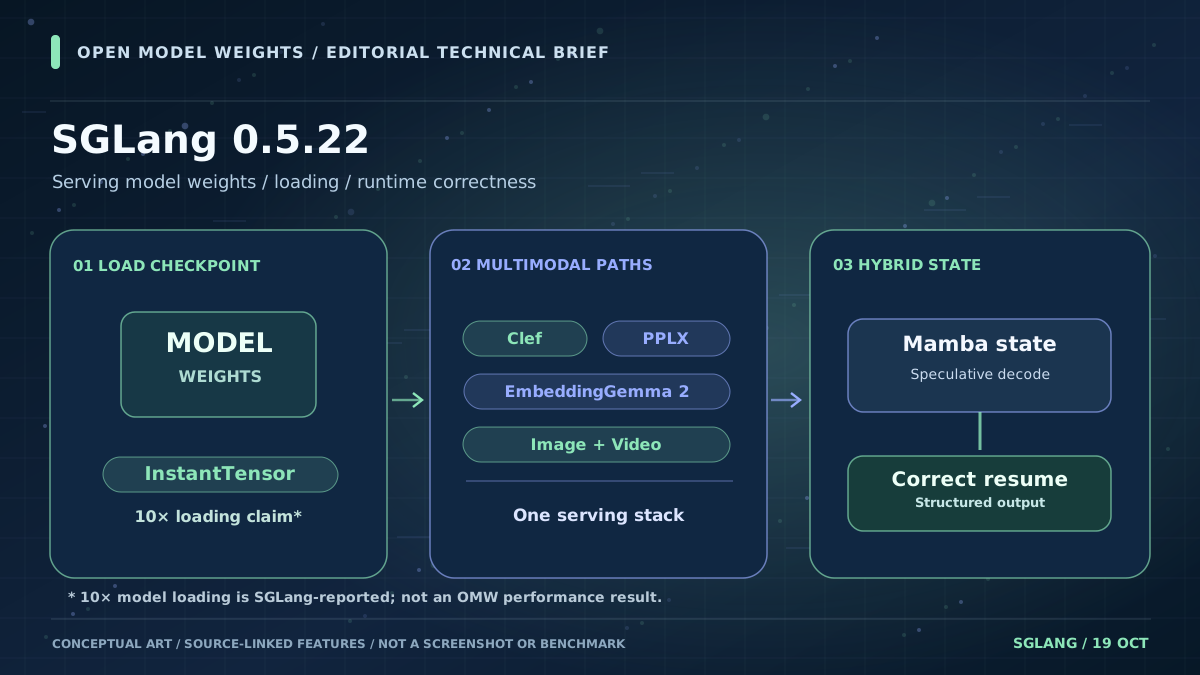
The October 19 serving release advertises a 10x loader improvement and new model integrations; it also fixes a speculative-decoding state error and raises the Python minimum.
Primary sourceSGLang official v0.5.22 GitHub release notesSource published 2026-10-19
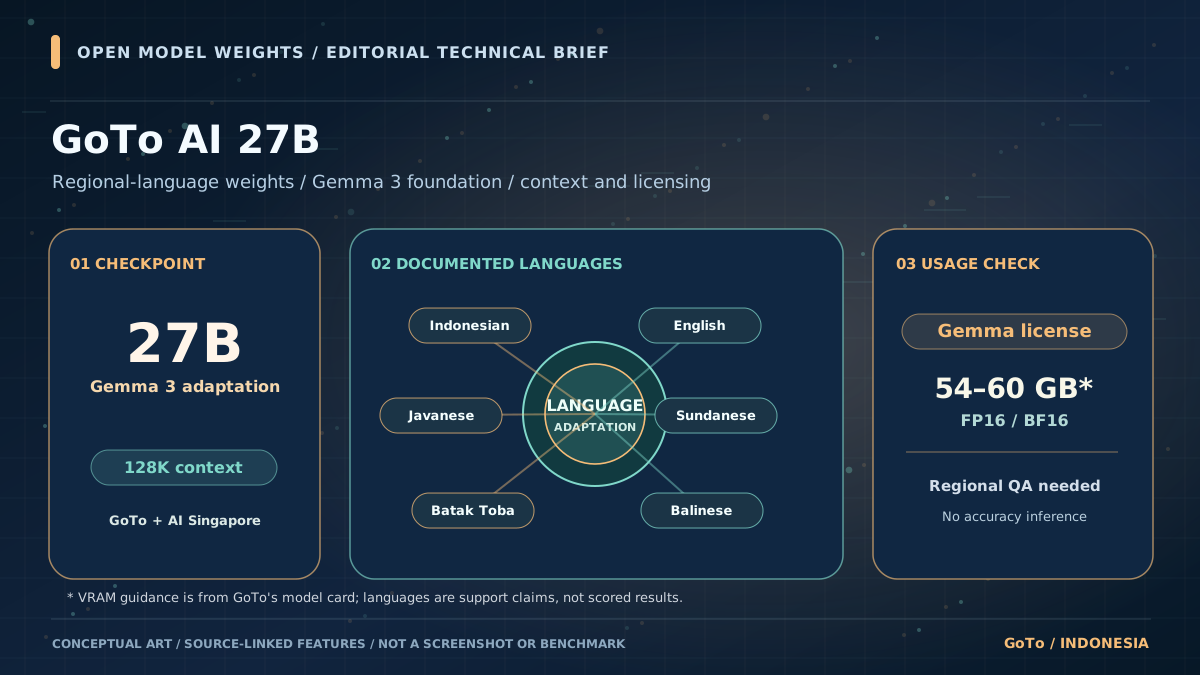
The new GoTo-AI checkpoint targets Indonesian culture and regional-language gaps, but its Gemma terms and full-precision memory footprint need careful reading.
Primary sourceGoTo Group official Gemma 3 27B instruct checkpoint model cardSource published 2026-10-19
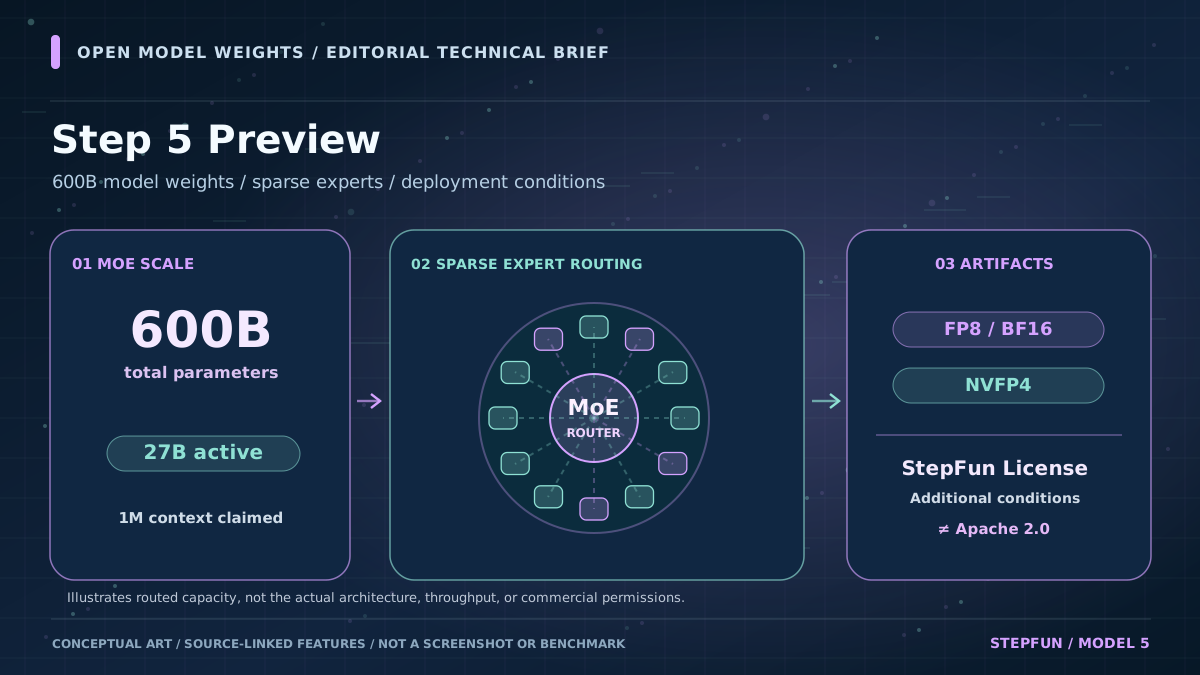
StepFun's downloadable multimodal MoE targets long-horizon agents, but its million-token context claim and Apache-style license language require precise qualification.
Primary sourceStepFun official Step 5 Preview BF16 model card and licenseSource published 2026-10-15
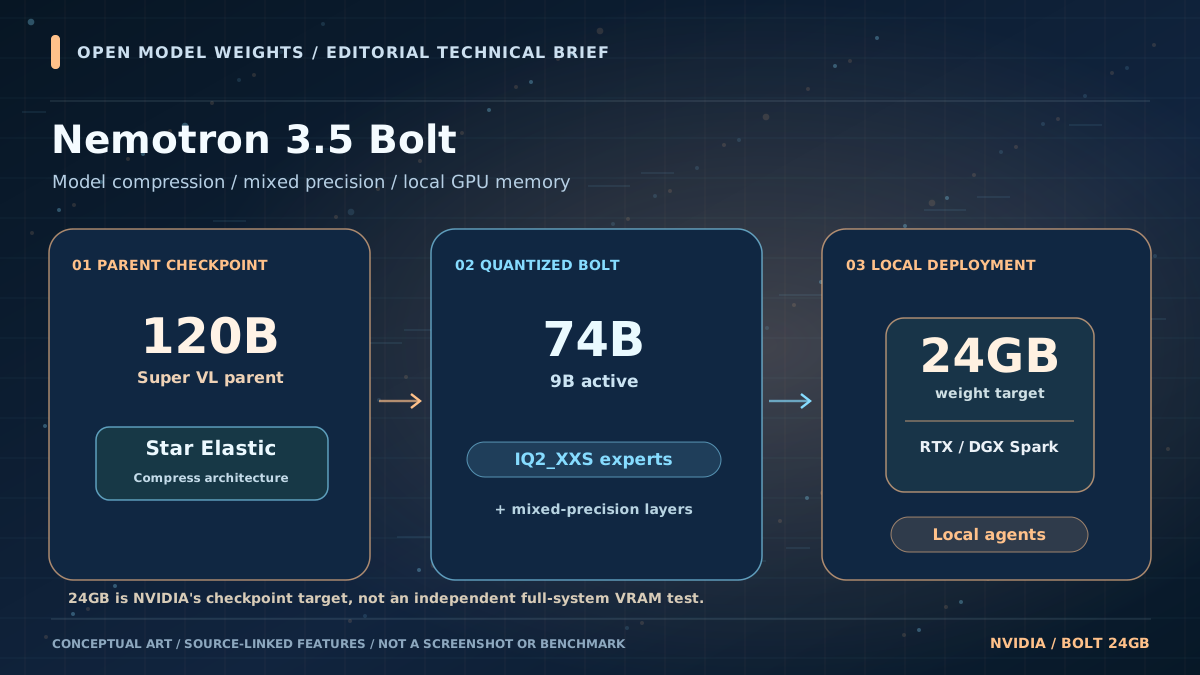
The compact Bolt checkpoint is designed for RTX and DGX Spark with native low-bit weights, while its BF16 sibling serves a different adaptation purpose.
Primary sourceNVIDIA Nemotron 3.5 Bolt 24GB technical report and official model cardSource published 2026-10-15
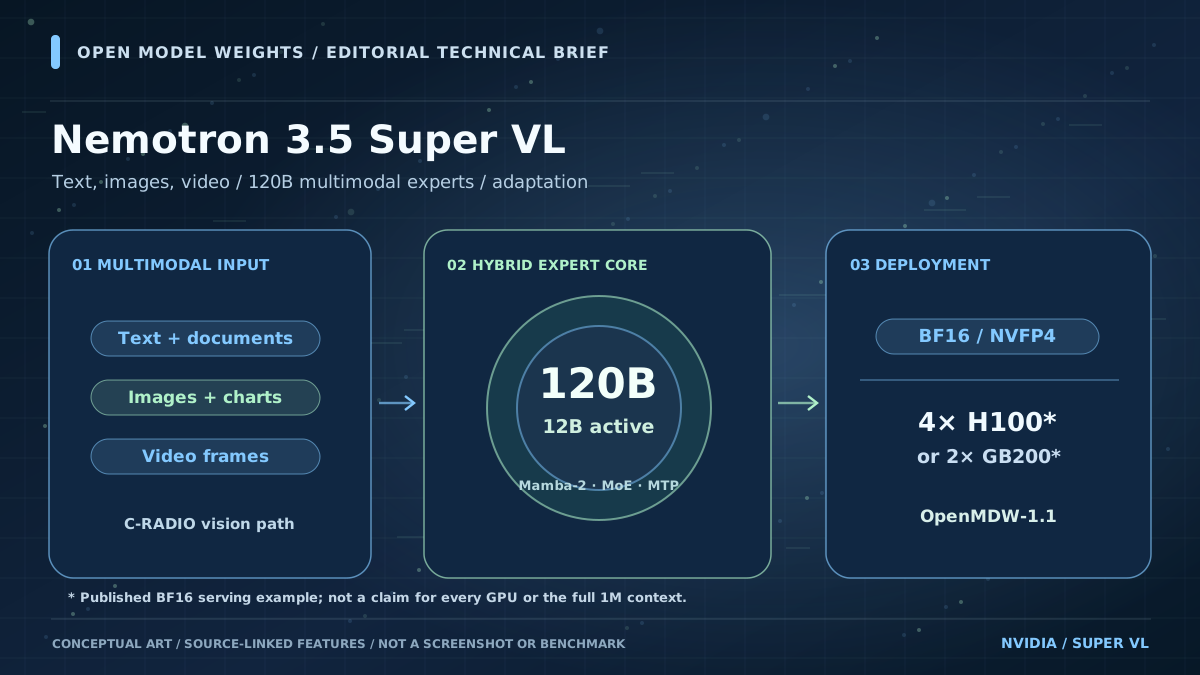
The new 120B-total, 12B-active vision-language parent of Nemotron Bolt targets document-heavy agents and custom training, with model-specific GPU requirements.
Primary sourceNVIDIA official Nemotron 3.5 Super VL BF16 model cardSource published 2026-10-15
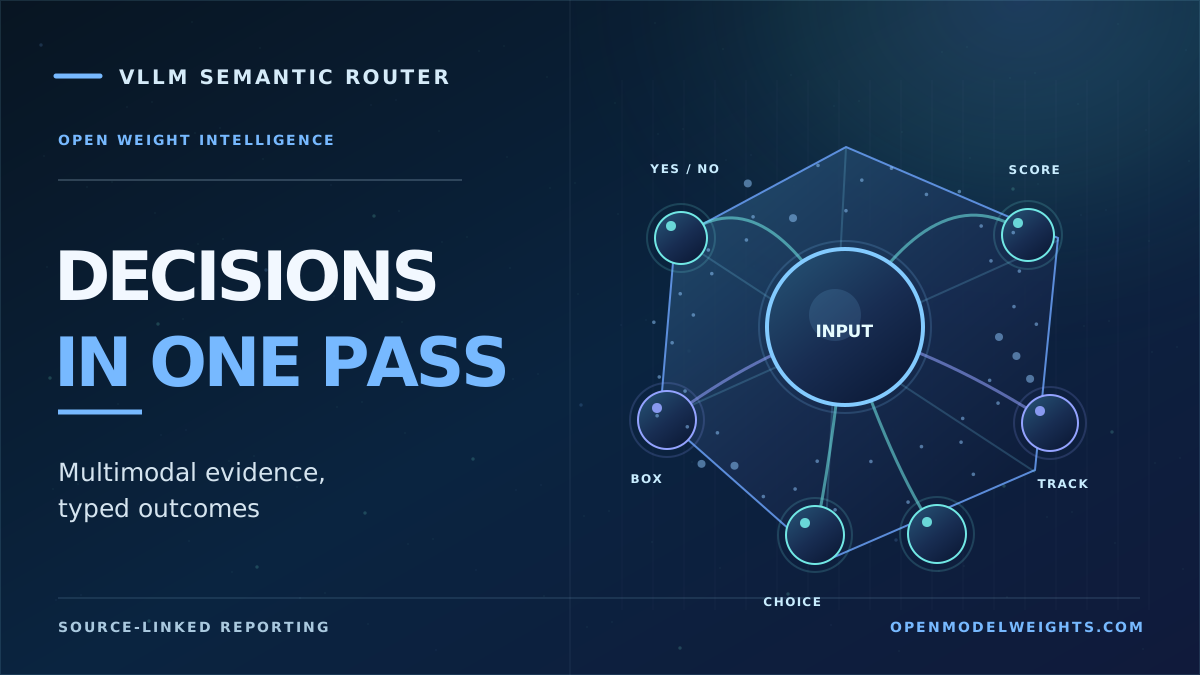
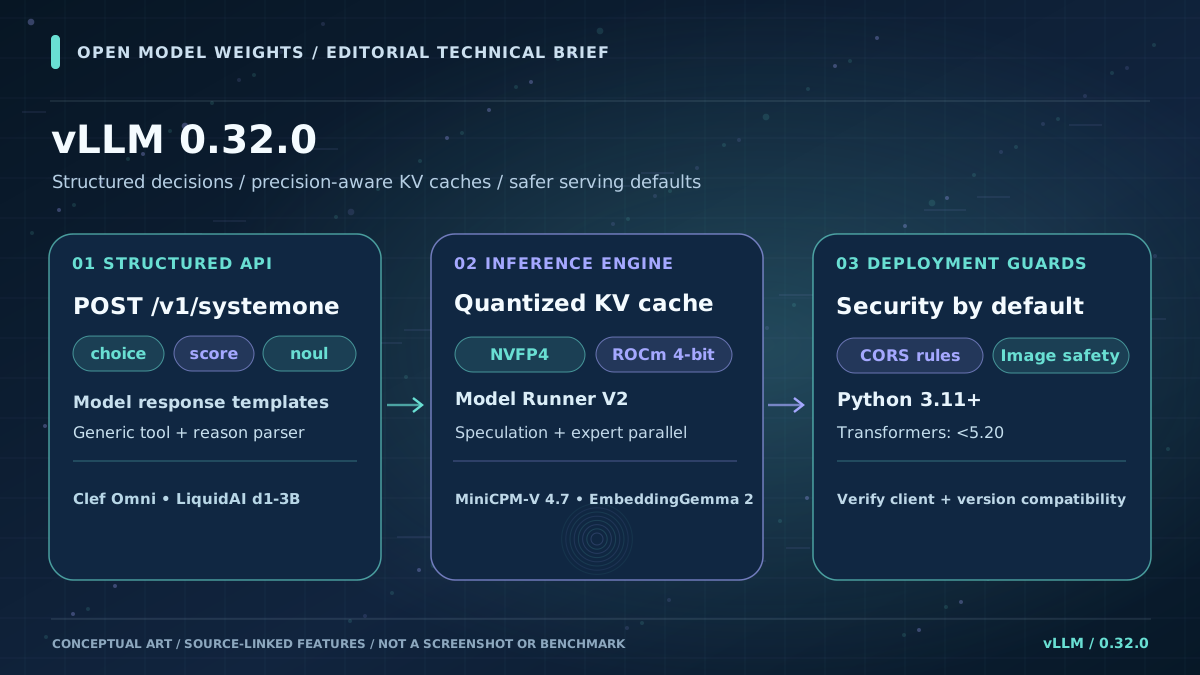
The October 18 serving release adds a structured decision endpoint and broader low-precision caches, while tightening security defaults and breaking some existing deployments.
Primary sourcevLLM project official v0.32.0 release notesSource published 2026-10-18
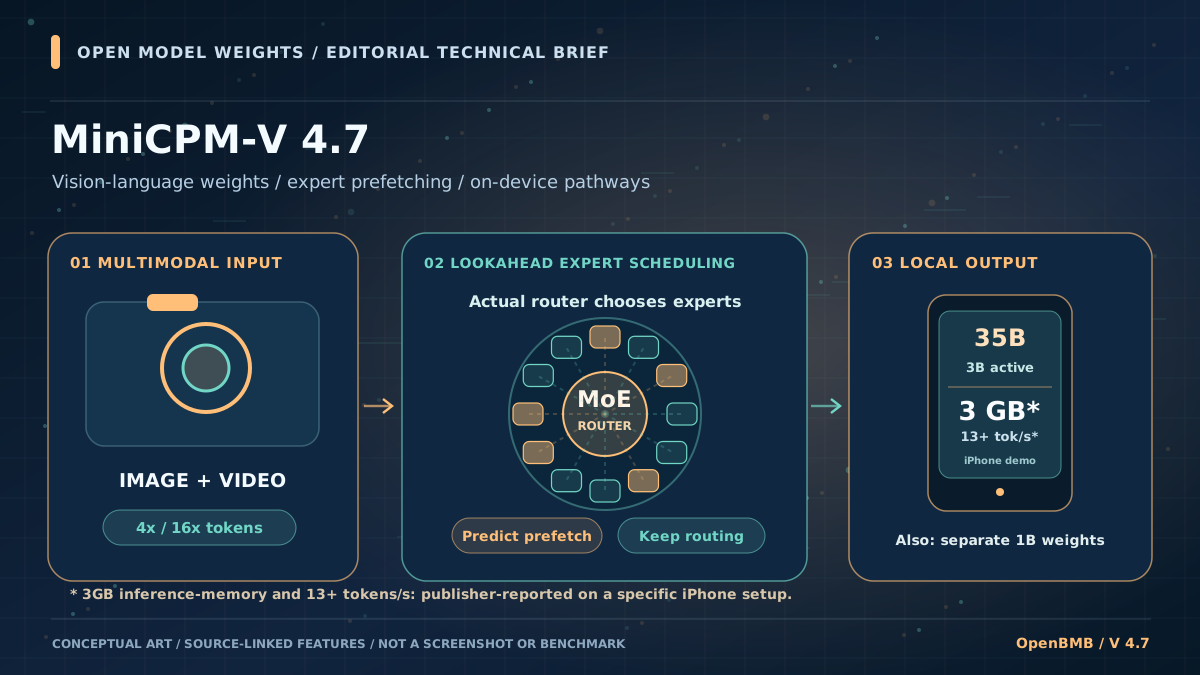
OpenBMB's Apache-2.0 vision-language family pairs a 35B-total, 3B-active MoE with a compact 1B alternative and an unusual expert-prefetching approach for phones.
Primary sourceOpenBMB official MiniCPM-V 4.7 technical guide, changelog and model cardSource published 2026-10-12
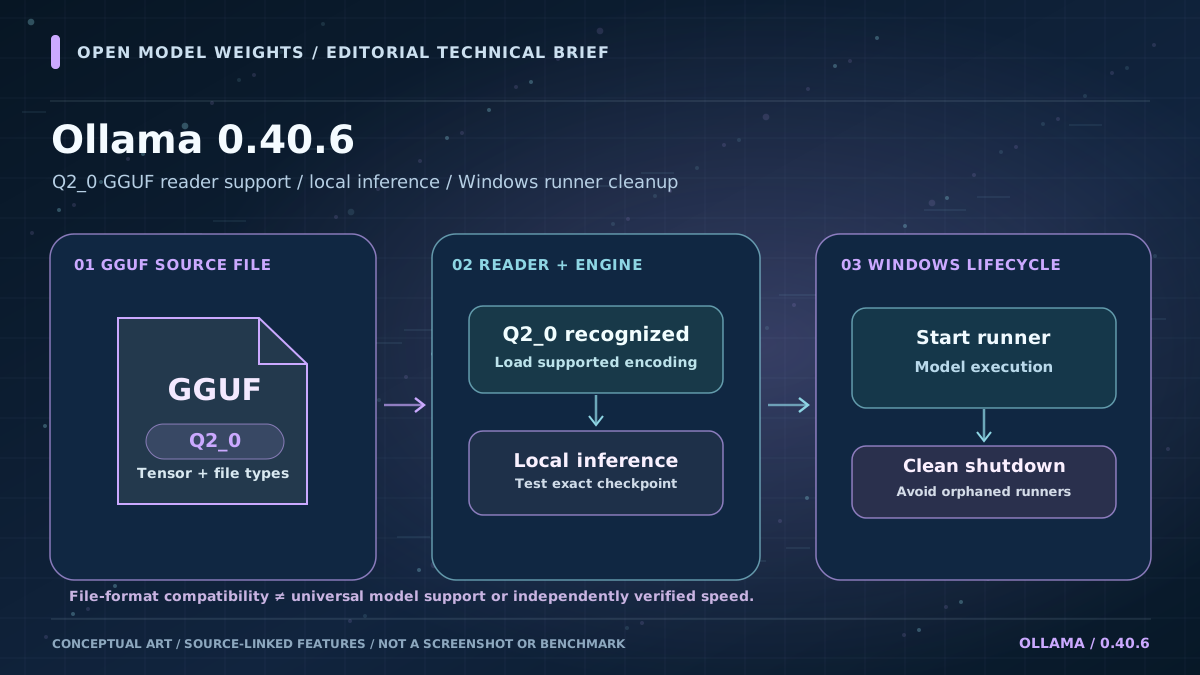
The stable Ollama update adds parsing for a new low-bit GGUF type and Windows runner cleanup, with smaller changes to a cloud model and interactive prompting.
Primary sourceOllama project official v0.40.6 release notes and GGUF format pull requestSource published 2026-10-16
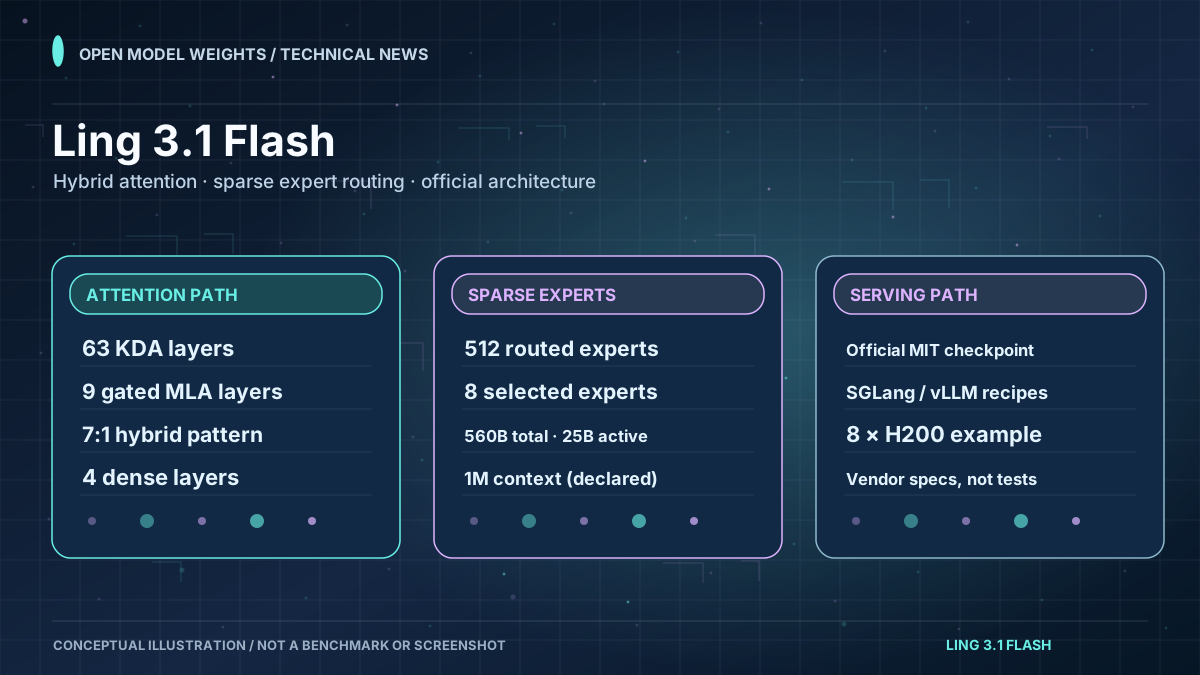
The 560B-total, 25B-active hybrid reasoning model pairs KDA and gated MLA attention with sparse experts; the public MIT checkpoint is aimed at server-scale agent and coding workloads.
Primary sourceInclusionAI official Ling-3.1-flash Hugging Face model card and revision historySource published 2026-10-13
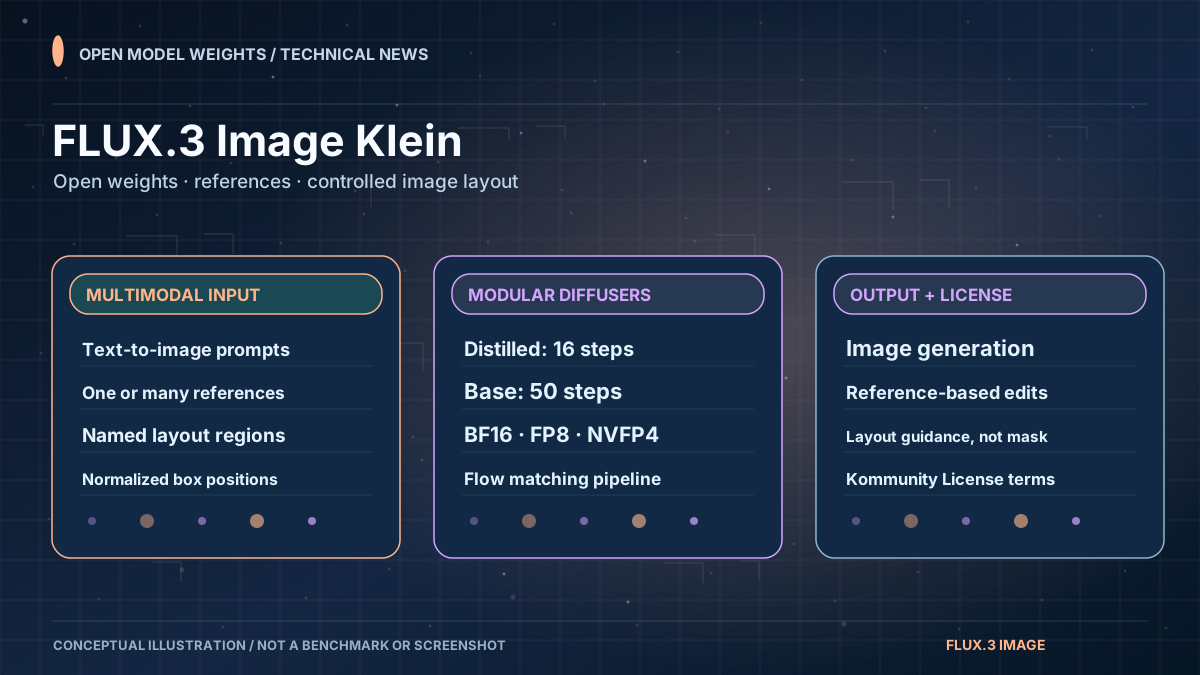
Two downloadable FLUX.3 Image Klein checkpoints support text-to-image, reference-based editing and bounding-box placement, but their Kommunity License is not a blanket commercial-use grant.
Primary sourceHugging Face Diffusers team technical announcement and Black Forest Labs official model cardSource published 2026-10-15
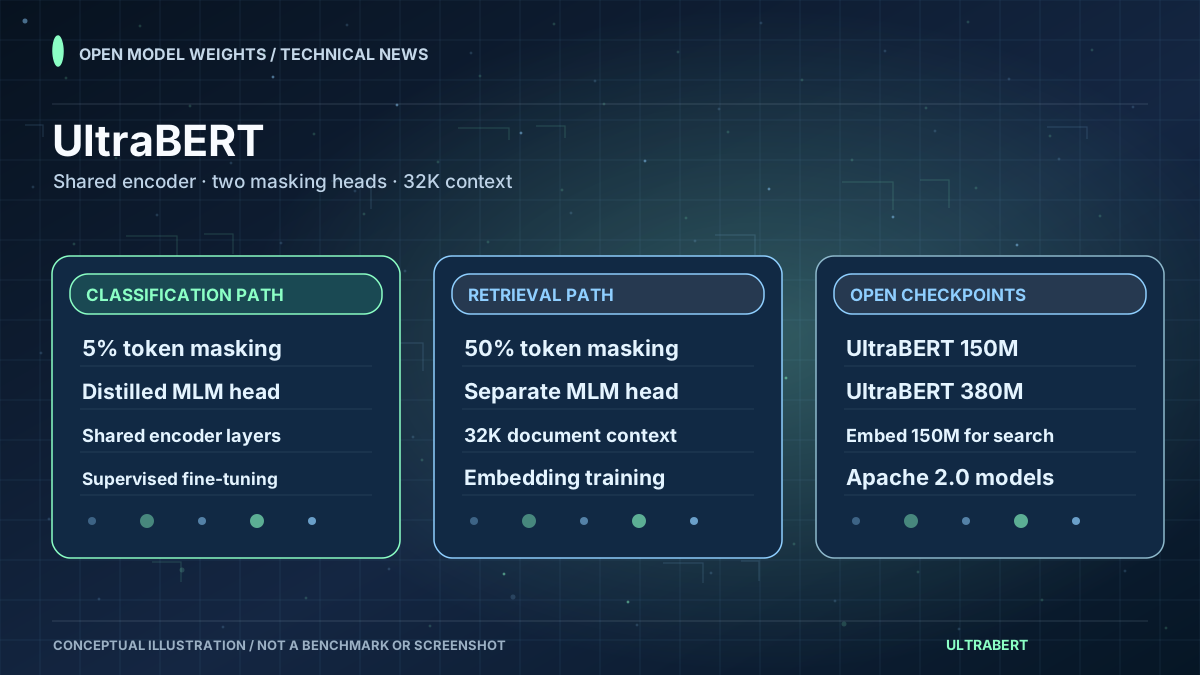
DMIS Lab publishes three Apache-2.0 checkpoints that combine dual masking objectives with a 32K context, aiming to serve classification and retrieval without two separate encoder families.
Primary sourceDMIS Lab original UltraBERT release article and model collection on Hugging FaceSource published 2026-10-14
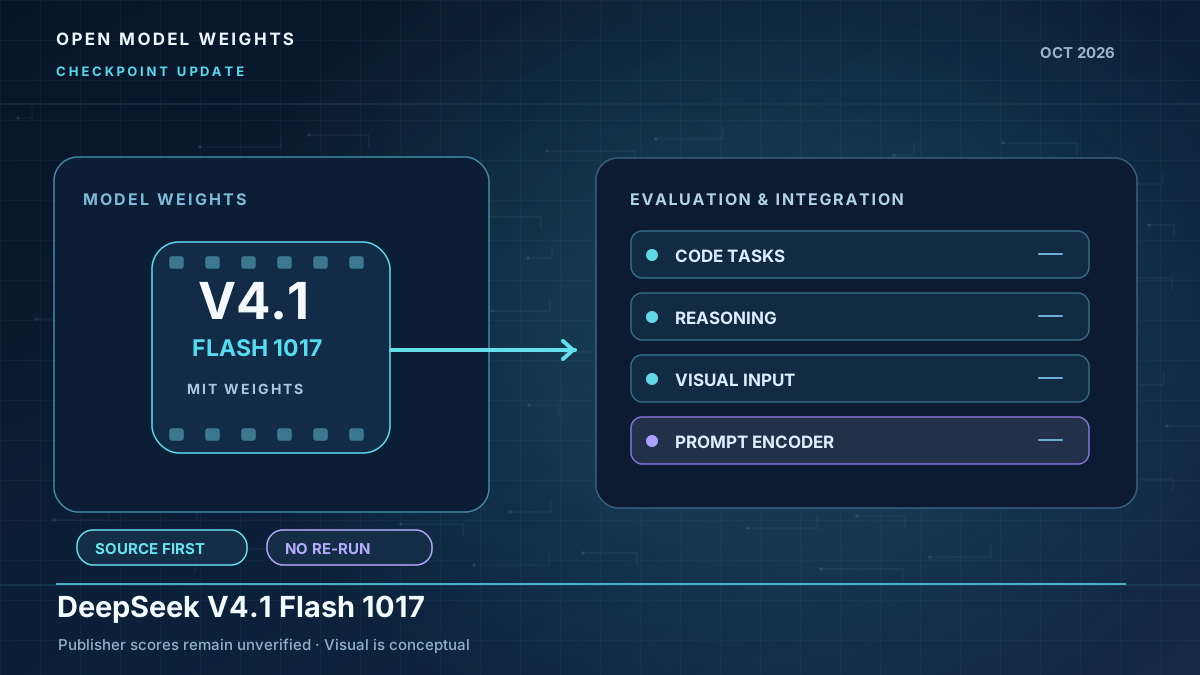
The October 17 checkpoint is a distinct MIT-licensed release; DeepSeek reports higher agent and coding scores, but reproducibility and prompt encoding matter.
Primary sourceDeepSeek official V4.1 Flash 1017 model card and MIT licenseSource published 2026-10-17
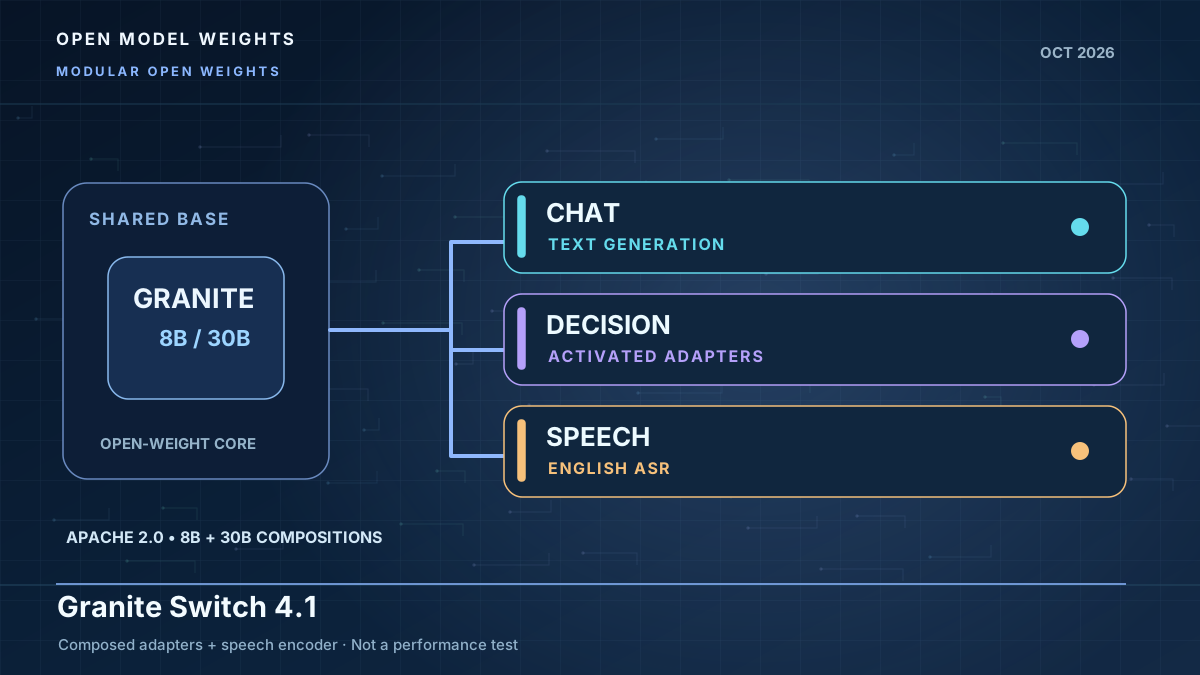
The Apache-2.0 8B and 30B checkpoints package decision and safety adapters with an English speech encoder; IBM's performance claims remain unverified here.
Primary sourceIBM Granite official Granite Switch 4.1 announcement and model cardsSource published 2026-10-15
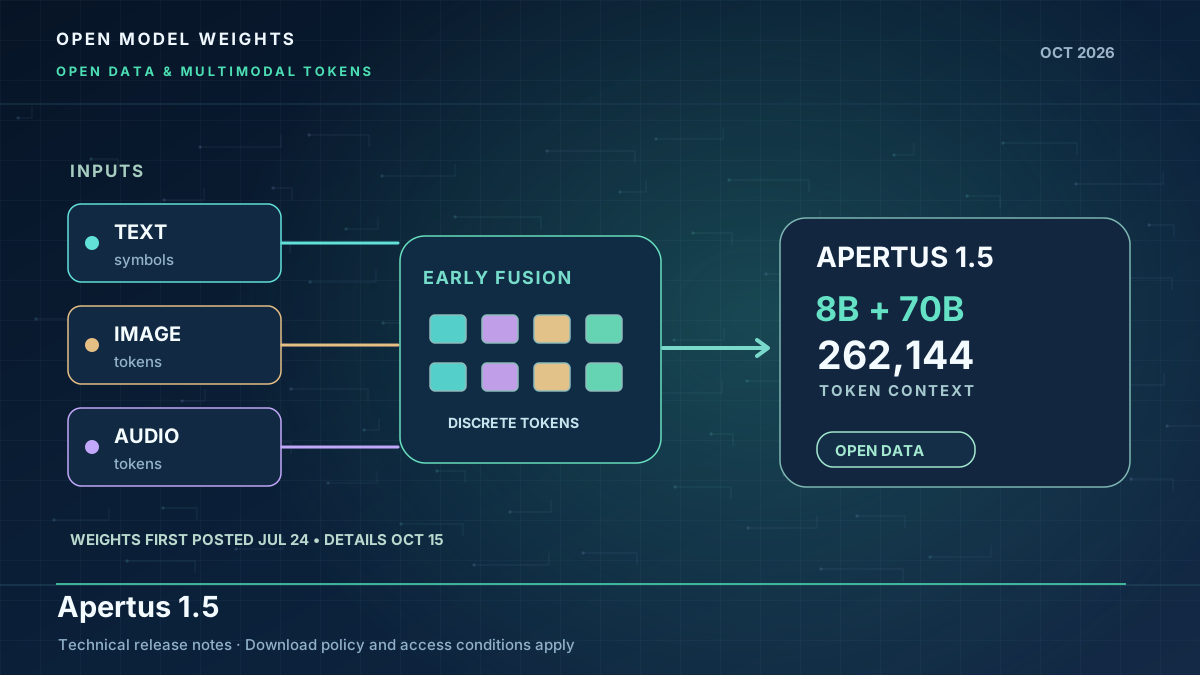
New October technical documentation explains how the previously released 8B and 70B weights handle image and audio input, with notable transparency and access caveats.
Primary sourceSwiss AI Initiative official Apertus 1.5 technical release notesSource published 2026-10-15
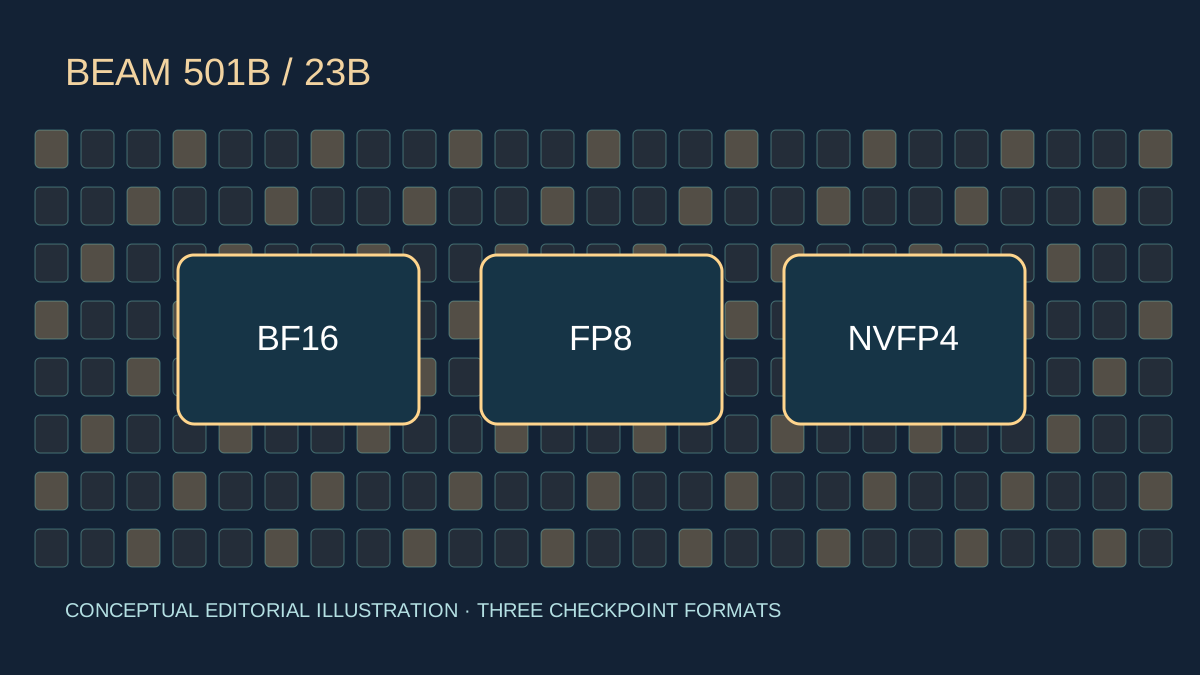
Beam moves from an early-October announcement to downloadable 501B-total, 23B-active model weights in three numerical formats, plus an optional speculative-decoding drafter.
Primary sourceReflection official 16 October Beam availability announcementSource published 2026-10-16
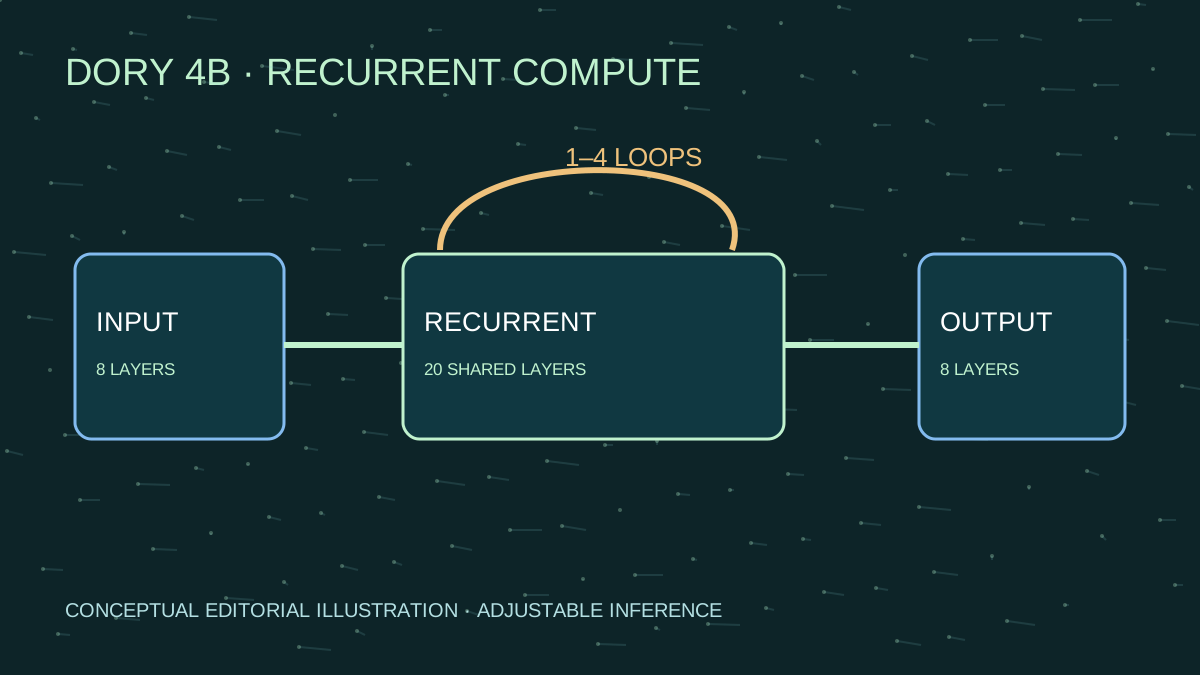
The experimental 4B-parameter Dory model reuses a recurrent transformer block at inference time, offering adjustable loop counts rather than a larger checkpoint for each compute budget.
Primary sourceNVIDIA official Nemotron Labs Dory1.0-4B model cardSource published 2026-10-16
Mistral's first time-series model family spans 5M, 28M, 123M and 209M parameters, supports covariates and probabilistic outputs, and is downloadable under modified MIT terms.
Primary sourceMistral AI official Timestral launch and model documentationSource published 2026-10-15
The new 24B-total, 2B-active mixture-of-experts checkpoint offers 131K context and tool-use training; Liquid AI's speed and benchmark claims remain publisher-attributed.
Primary sourceLiquid AI official release article, model card and licenseSource published 2026-10-13
Ai2 publishes HiRO-ACEv2 weights and inference guidance for global climate emulation and 3 km downscaling; its reported cost and extreme-event fidelity remain author measurements.
Primary sourceAllen Institute for AI official research article and HiRO-ACEv2 model cardSource published 2026-10-14
The University of Innsbruck team's 179M-parameter English retriever packages dense and token-level matching into one ColBERT-compatible model; its BEIR numbers are author-reported.
Primary sourceUniversity of Innsbruck Data Science group official technical article and model cardSource published 2026-10-12
Sparseup-fr-v0 adapts Linkup's sparse-retrieval recipe to French with a 50,240-dimensional output and a downloadable model card; benchmark gains are author-reported.
Primary sourceAlphaEdge AI author technical article and official Hugging Face model cardSource published 2026-10-12
The vLLM maintainers outline Q4 work on faster agentic serving, production recipes, model support and reliability; the roadmap is not a release announcement.
Primary sourcevLLM maintainers' official Q4 2026 roadmapSource published 2026-10-10
LightOn’s local 2B code-search agent returns source locations to coding assistants; the publisher reports fewer paid tokens, with latency and accuracy trade-offs.
Primary sourceLightOn official ColGrep-Agent-2B technical articleSource published 2026-10-12
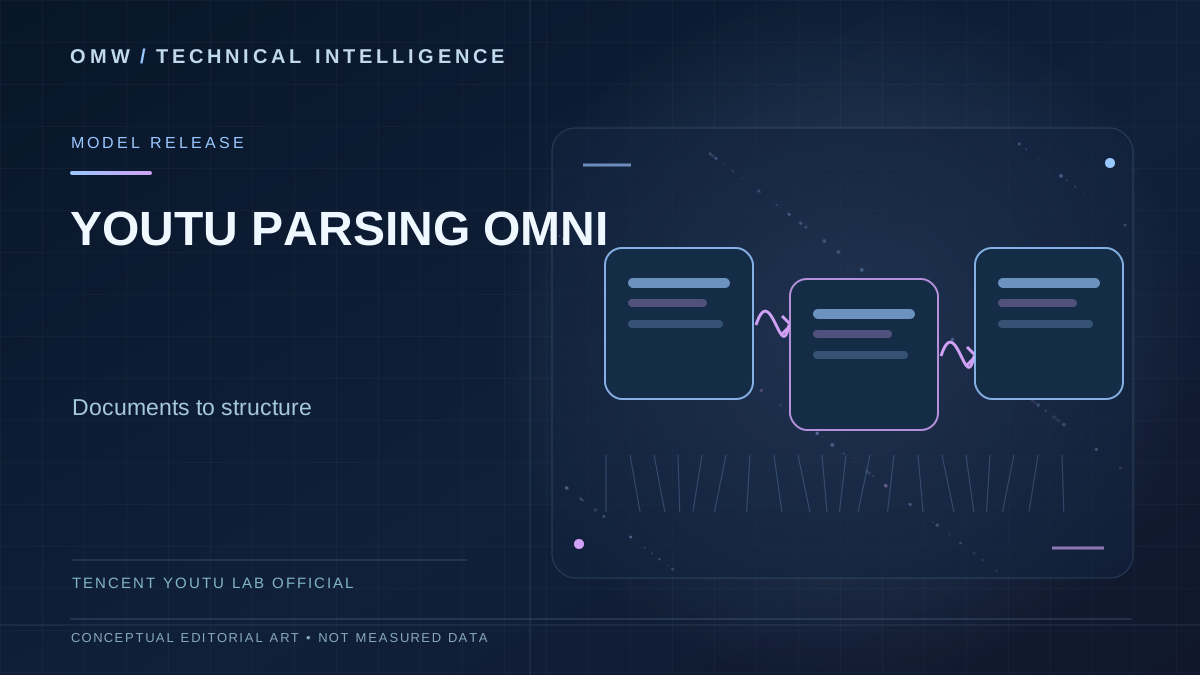
Tencent's 5B multimodal parser emits structured JSON across documents, images, audio and video, but its custom weight license expressly says it is not intended for EU use.
Primary sourceTencent Youtu Lab official Hugging Face model card and licenseSource published 2026-10
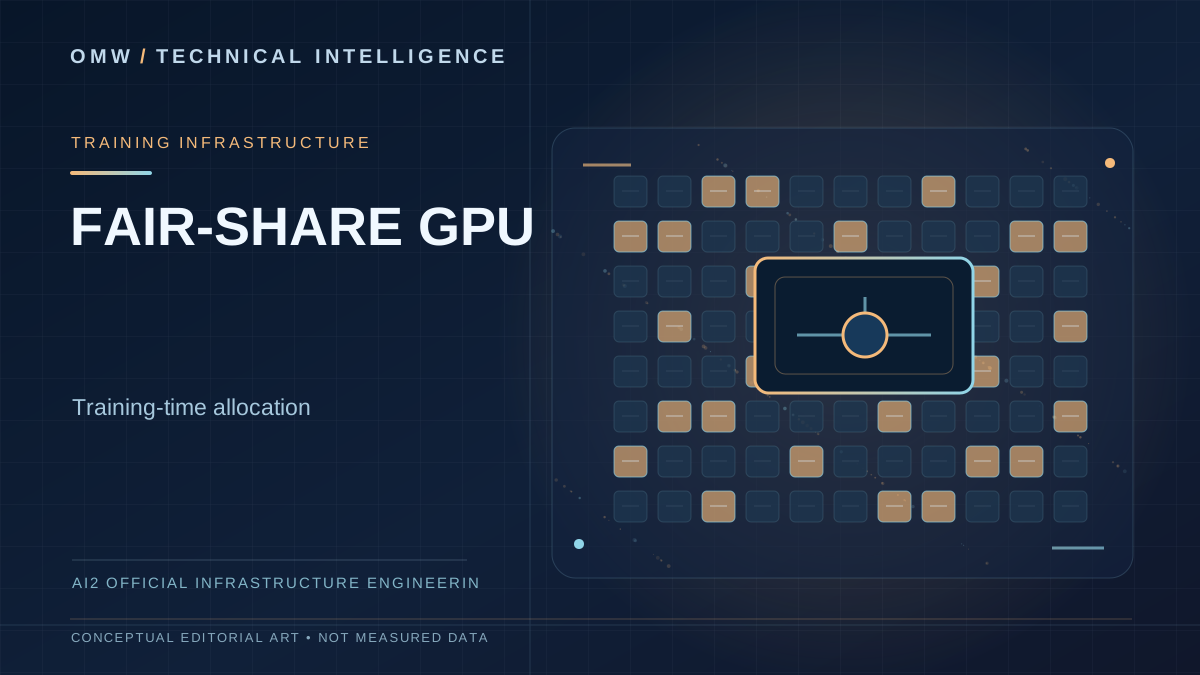
Ai2 describes replacing priority queues with GPU-time budgets, fair-share scheduling and protected run windows; its operational results are reported by the lab itself.
Primary sourceAi2 official infrastructure engineering reportSource published 2026-10-09
Perplexity publishes MIT-licensed 0.6B and 9B late-interaction embeddings for text, images and documents, with a shared index-query space and explicit storage tradeoffs.
Primary sourcePerplexity official Hugging Face model cardsSource published 2026-10-07
Cloudflare's new Apache-2.0 Clef-omni checkpoint scores structured decisions across audio, video, images and text; publisher latency claims are not independent OMW tests.
Primary sourceCloudflare official release and Hugging Face model cardSource published 2026-10-09
Qwen releases a downloadable 7B visual-generation checkpoint with a configured eight-step schedule, while its research license restricts commercial self-hosting.
Primary sourceQwen official Hugging Face model card and licenseSource published 2026-10-09
FINAL-Bench releases a Safetensors classifier that produces typed decision probabilities without generative decoding; its creators have corrected initially inconsistent per-type benchmark figures.
Primary sourceFINAL-Bench / Hugging Face model cardSource published 2026-10-08
JetBrains publishes an Apache-2.0 MoE checkpoint with 2.5B active parameters, 131K context and reinforcement-learning upgrades for repository-level agent tasks; performance claims remain publisher-attributed.
Primary sourceJetBrainsSource published 2026-10-08
CIQ's orchestration release lists eleven validated model presets, a vLLM catalog path and autoscaled endpoints across private and cloud GPU fleets; it does not announce new model weights.
Liquid AI’s d1-3B and experimental d1-omni-600M models score typed decisions instead of generating prose; its launch includes published model cards, architecture details and hardware-specific latency claims.
Primary sourceLiquid AI / Hugging FaceSource published 2026-10-07
An NVIDIA research report describes task-specific Nemotron checkpoints, curated training sets and generate–verify–refine pipelines for competitive programming and mathematics, with performance claims tied to their exact evaluation conditions.
Primary sourceNVIDIA / Hugging FaceSource published 2026-10-07
The 3.35B open-weight research model is trained to keep reasoning in the user’s language, combining English reasoning, translated multilingual reasoning and non-reasoning multilingual data.
Primary sourceCohere LabsSource published 2026-10-06
The 740M-parameter Apache-2.0 model maps text, code, images, video and audio into one embedding space, with modular encoders, an 8K context window and published on-device deployment paths.
Primary sourceGoogle DeepMindSource published 2026-10-06
Hugging Face’s October 6 release adds Google’s multimodal EmbeddingGemma 2 architecture, makes token-dispatch expert parallelism the default for Qwen3 MoE and Mellum, and repairs quantized-cache behavior.
Primary sourceHugging Face TransformersSource published 2026-10-06
The October 5 serving release adds a GPU-resident weight-cache daemon, experimental initialized-engine snapshots, new speculative-decoding paths and a broad set of DeepSeek V4.1 Flash optimizations.
The official Index-Translate GGUF repository packages llama.cpp conversions from Q2_K through F16 for the 36B-parameter preview model, with Apache-2.0 metadata and local-serving instructions.
Primary sourceIndex Team / Hugging FaceSource published 2026-10-03
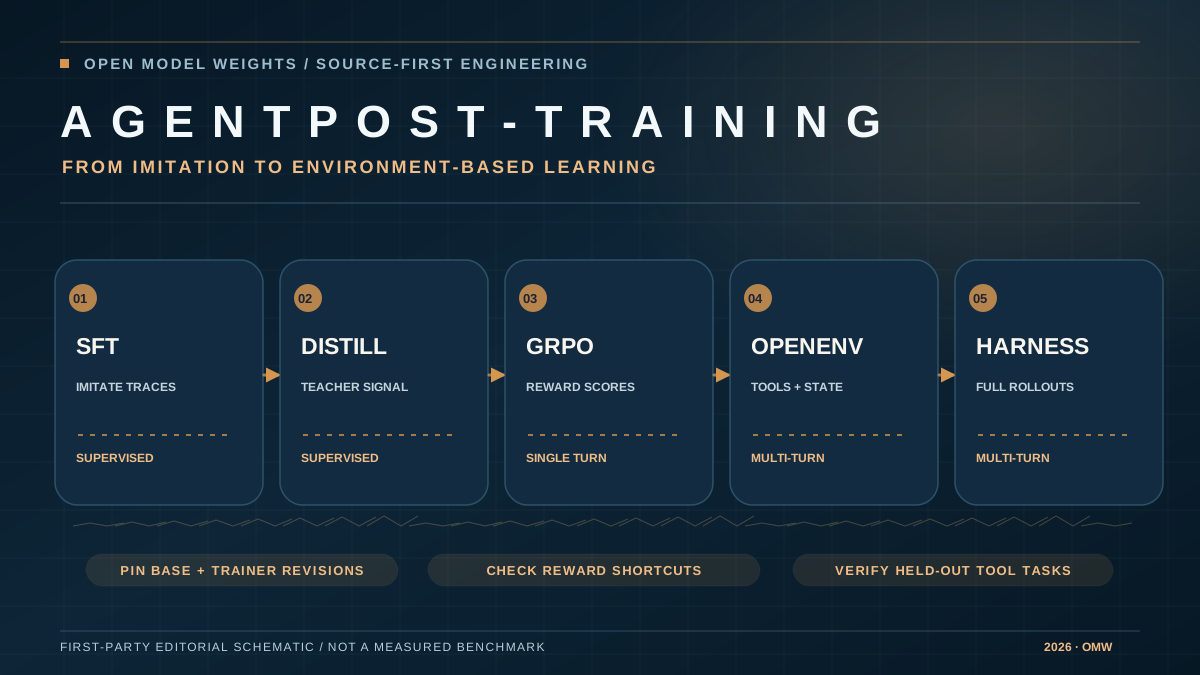
CoreAI’s pipeline turns observed agent failures into executable training tasks, uses a stronger teacher to identify solvable gaps, and validates prompts, environment state, trajectories and verifiers before samples enter training.
Primary sourceServiceNow CoreAI / Hugging FaceSource published 2026-10-02
The preliminary RIDM release includes separate optical-flow and pixel models that infer camera motion from video, with Safetensors checkpoints, reproducible inference code and explicit Apache-2.0 weight licensing.
Primary sourceReka AI / Hugging FaceSource published 2026-10-02
NVIDIA’s latest telecom report says 89% of respondents view open-source models and software as important to AI strategy, while a new 30B Nemotron telco model and an open fine-tuning recipe target operator workloads.
The 27B Clef and 9B Clef-Flash turn text, JSON, images or video into typed probability outputs, with Apache-2.0 repositories, sharded Safetensors and Jev/SystemOne-compatible interfaces.
Primary sourceCloudflare / Hugging FaceSource published 2026-10-01
The quantized decision-model checkpoint cuts publisher-reported weight download size from 49.5 GB to 18 GB and weight memory to 17.1 GiB while retaining a Gemma 4 backbone and a separate System 1 decision layer.
Primary sourceAutoTrust / Hugging FaceSource published 2026-10-03
The multimodal MoE activates 49B parameters, lists a 1M-token context window and is available first as an API preview; Mistral says downloadable weights will arrive by month-end.
The new Falcon family spans a 7B Emirati-dialect language model, a 1.6B speech recognizer and a compact Arabic OCR model, extending TII's stack across text, audio and documents.
Primary sourceTechnology Innovation InstituteSource published 2026-10-06
Beam is a 501B-total, 23B-active sparse MoE for coding and agentic workloads, but the current release is an early-access preview rather than a downloadable checkpoint.
Primary sourceReflection AISource published 2026-10-05
The runtime release combines a Hugging Face Hub download pipeline with new batch APIs, decision-model serving and explicit support for GLM-5.3-Flash, Clef and Qwen4Exp workflows.
The 78.1B-parameter mixture-of-experts model targets German-English sovereign deployment, with FP8 and BF16 weights, tool calling and a stated context ceiling of 1,048,576 tokens.
Primary sourceAleph AlphaSource published 2026-10-03
AstaBrief turns retrieved scientific evidence into cited reports and gives institutions an open-weight option for running the report-writing stage on their own infrastructure.
Primary sourceAi2 / Hugging FaceSource published 2026-10-02
The local inference stack can now score typed options directly instead of generating free-form text, opening a different deployment path for routing, moderation and agent control.
Primary sourceggml-org / Hugging FaceSource published 2026-10-02
Ai2 redesigned its open training infrastructure around MoE routing, expert parallelism and lower-precision execution, with the next generation of Olmo expected to use the stack.
Primary sourceAi2 / Hugging FaceSource published 2026-10-01
The Kumo Structured family targets classification and regression directly from labeled tables, with three small model sizes and a commercial-use license.
Primary sourceNVIDIA / Hugging FaceSource published 2026-09-29
H Company’s new agentic family is designed to move between GUIs, code, MCP and APIs, with downloadable weights in multiple precisions and public benchmark trajectories.
Primary sourceH Company / Hugging FaceSource published 2026-09-28
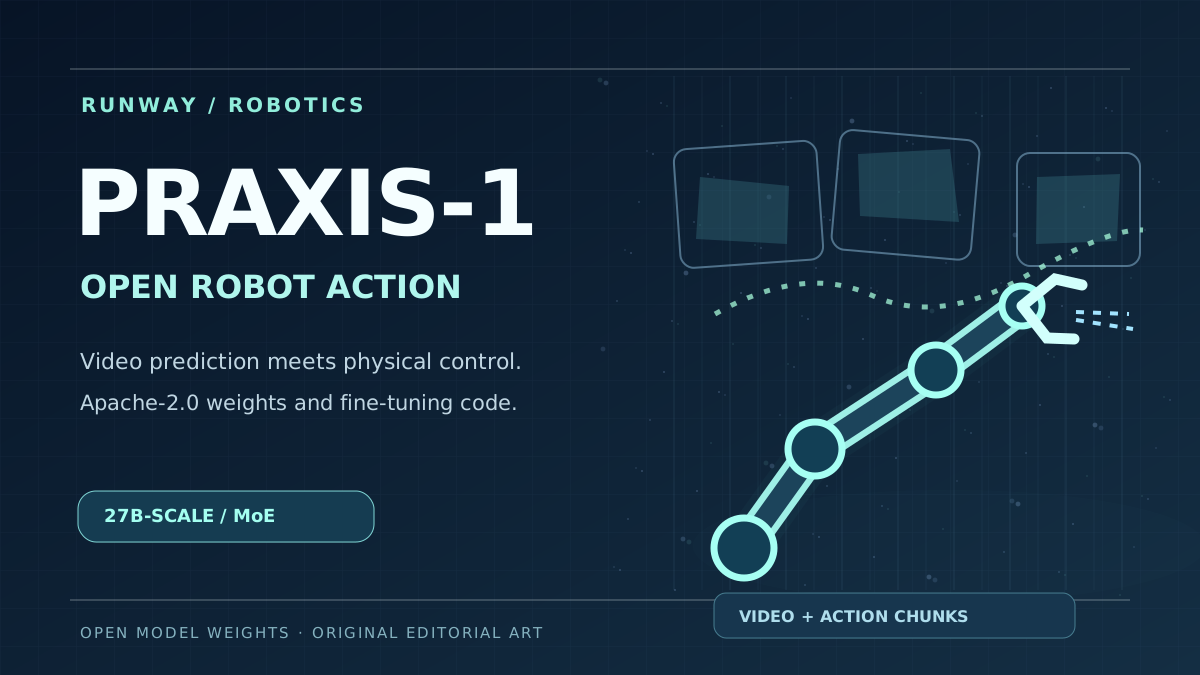
FLUX 3 Action predicts future frames and actions together and arrives with robot-policy checkpoints, LeRobot integration and a dedicated weights license.
Primary sourceBlack Forest Labs / Hugging FaceSource published 2026-09-23
GGUF checkpoints can now be loaded through familiar Transformers APIs while reusing ggml kernels to target practical local inference, initially with an Apple Silicon focus.
Primary sourceHugging FaceSource published 2026-09-22
The $12.93 billion agreement would put the central model-sharing platform inside NVIDIA while the companies publicly commit to model, cloud and accelerator choice.
Publisher blogs, model cards, release notes and repositories are preferred over second-hand coverage.
Claims stay attributed
Benchmark, speed and performance claims remain publisher claims unless Open Model Weights independently measures them.
No quota pressure
The system can publish up to ten briefs per day, but fewer are published when there are fewer meaningful developments.
Registry context
Each brief distinguishes a model-record candidate from runtime, compatibility, infrastructure or ecosystem news.
Open Weight Intelligence is produced with automated research assistance and source-first editorial rules. Every brief links to its primary source, and unsupported details remain absent rather than inferred.

 AI-generated editorial illustration