NVIDIA has published Nemotron Labs Dory1.0-4B, a small open-weight reasoning model whose central idea is to spend more computation on a token without loading a different, larger checkpoint. The official model card dates the release to October 16, 2026. Dory uses a latent-recurrent, normalized-GPT architecture with a shared block of transformer layers that can be applied repeatedly during inference. This is a distinct design choice from the sparse mixture-of-experts systems that dominate many larger recent launches.
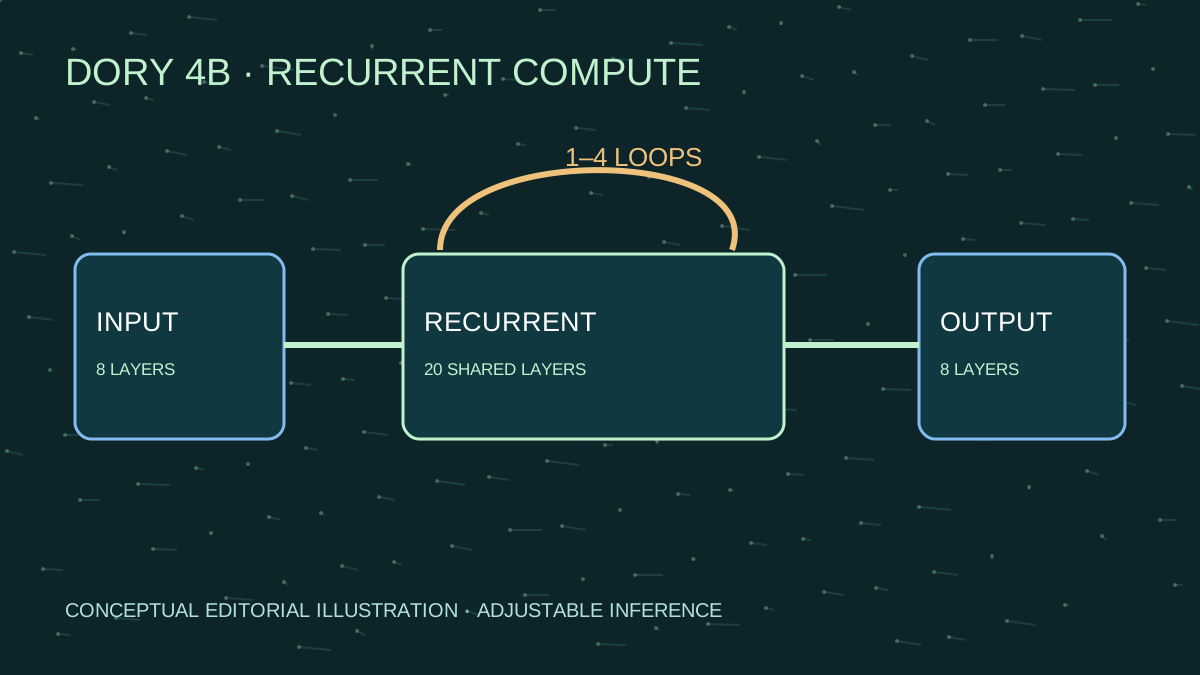
NVIDIA describes an eight-layer input stack, a 20-layer recurrent block and an eight-layer output stack. Operators can select one, two or four passes through the shared block to trade computation for task quality. The company also documents a last-loop key-value cache option that avoids keeping a separate recurrent attention cache for every pass. Those are architectural and configuration features; they do not guarantee faster or more accurate responses on every workload. The supported context length is up to 256,000 tokens, according to the publisher.
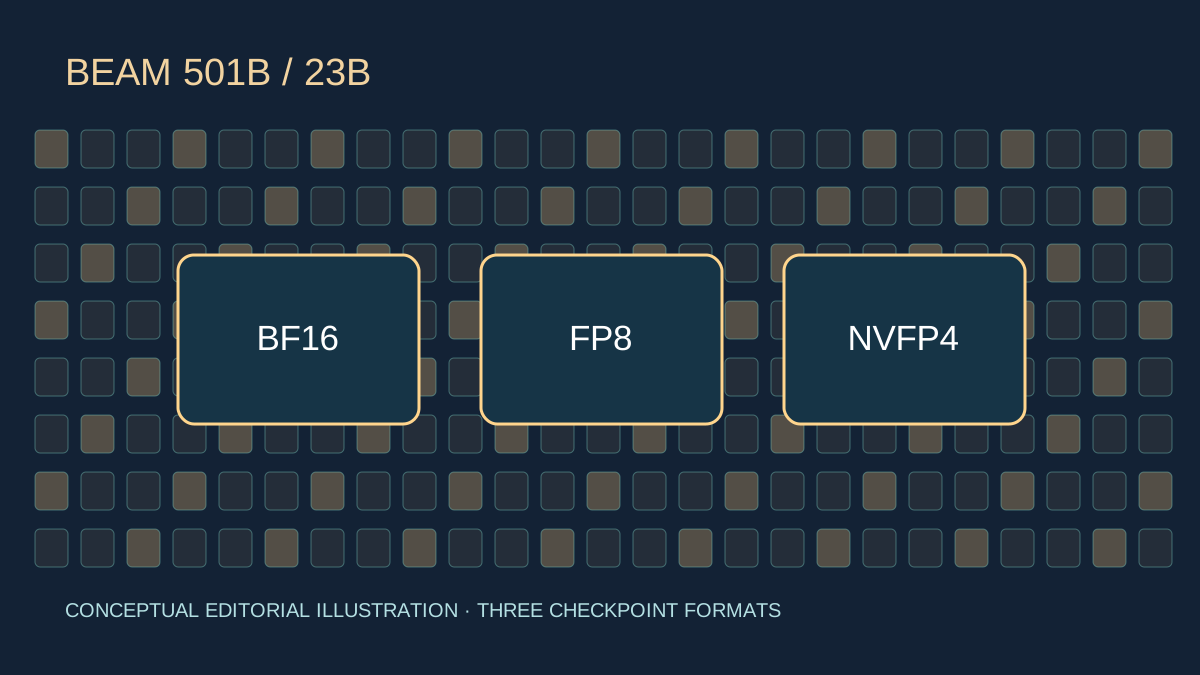
The release includes a BF16 checkpoint and lists MXFP8, NVFP4 and Q5_K_M GGUF variants. NVIDIA provides serving examples for a compatible vLLM setup and a Dory-specific llama.cpp branch, which should not be mistaken for universal compatibility with every unmodified runtime. The model card reports six trillion pretraining tokens and a subsequent 300-billion-token context-extension phase. It also describes continued supervised and reinforcement-learning stages, with training and performance figures supplied by NVIDIA rather than independently verified by this publication.
The model is offered under NVIDIA's OpenMDW License Agreement version 1.1; NVIDIA explicitly says commercial and non-commercial uses are supported, but the actual license text still governs redistribution and deployment. For the Open Model Weights registry, Dory's loop count belongs in inference configuration metadata, while each precision export requires its own pinned weight evidence. The interesting question is whether variable latent computation offers a useful quality, latency and memory trade-off on real tasks; that remains a measurement question, not a headline benchmark claim.
What this changes for the evidence layer
The new 4B BF16 model and distinct MXFP8, NVFP4 and GGUF exports are checkpoint candidates, not verified entries merely because the model card lists them. Pin each official repository and weight manifest; record the OpenMDW-1.1 license and actual supported runtimes. Inference loop count (one, two or four) and recurrent KV-cache mode are configuration settings, not new model weights. Keep publisher-reported benchmark and DGX Spark speedup figures attributed; independently test memory, latency and answer quality before making deployment claims.
NVIDIA official Nemotron Labs Dory1.0-4B model card
This brief is based on the cited primary source. Performance, benchmark and comparative claims remain attributed unless Open Model Weights publishes an independent measurement.
Open source article ↗