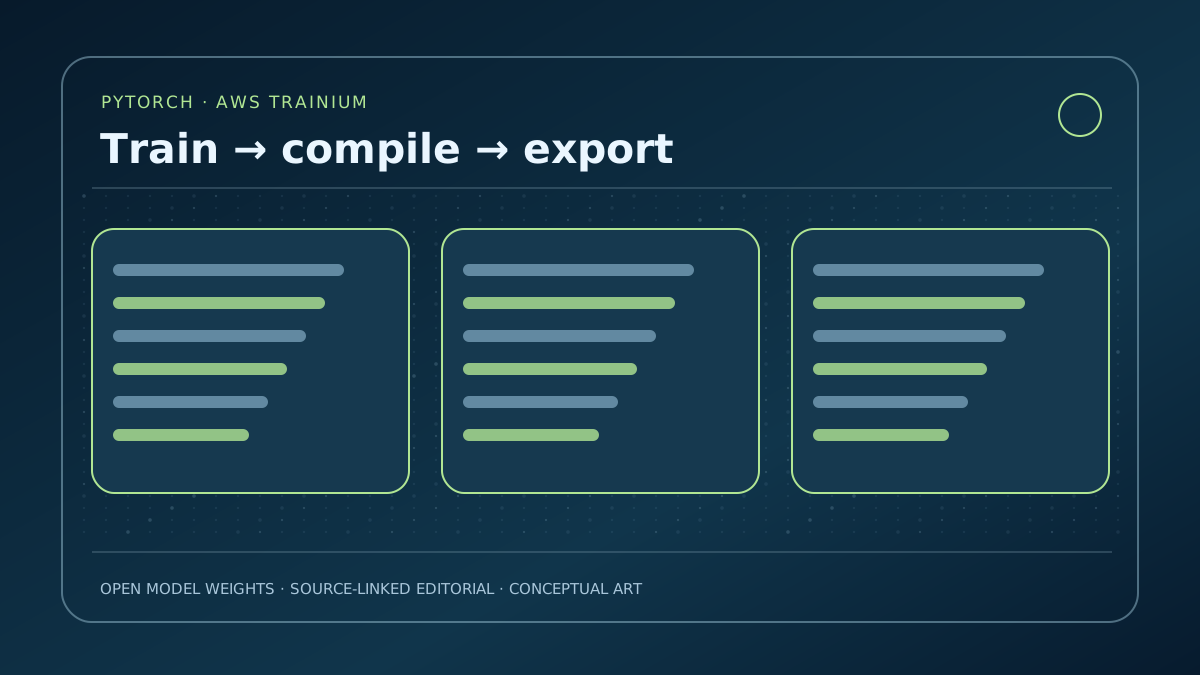
Hugging Face and AWS have introduced TorchNeuron, a new native PyTorch path for AWS Trainium accelerators. The October 19 technical announcement schedules a public beta for October 20. Its aim is to let developers reuse familiar training and inference abstractions for downloadable AI models, instead of maintaining specialized versions of every model implementation for one accelerator backend.
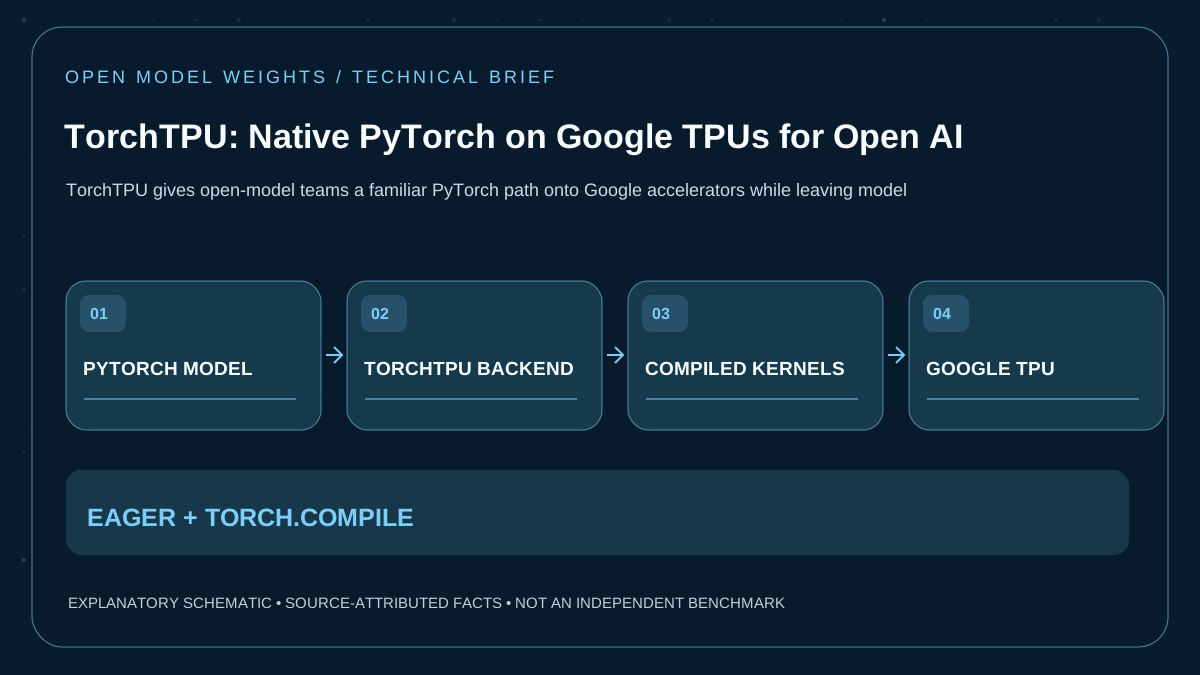
The new Neuron device is described as supporting eager PyTorch execution, torch.compile and distributed training interfaces including FSDP2 and tensor parallelism. Hugging Face says Transformers, Diffusers, Accelerate, PEFT and TRL can use their existing classes and scripts. This differs from older Optimum Neuron workflows that relied on more compiler-oriented PyTorch XLA integration and specialized wrappers around model code.
The published Qwen3-8B supervised fine-tuning recipe uses eight Trainium2 chips and 32 NeuronCores. Crucially, the example also disables automatic dynamic shapes, pads input sequences to predictable lengths and disables asynchronous weight loading. These constraints show that a familiar PyTorch interface is not proof that every architecture, model format, quantization or training shape is supported without changes.
The tutorial says the completed artifact is an ordinary Transformers checkpoint, rather than a file locked to Neuron hardware. That could improve portability and hardware choice for open weights. However, AWS instance costs, regional availability and performance depend on exact workloads. Open Model Weights has not independently measured speed, efficiency or cost per token. TorchNeuron is a significant inference-and-training infrastructure development, not a new model checkpoint or a guarantee of performance parity with GPUs.
What this changes for the evidence layer
TorchNeuron is a serving and training backend, not a newly released model weight. Check architecture support and specific public-beta constraints rather than promoting model capabilities.
Hugging Face official TorchNeuron announcement
This brief is based on the cited primary source. Performance, benchmark and comparative claims remain attributed unless Open Model Weights publishes an independent measurement.
Open source article ↗